Linguistics Symposium
The seventh Linguistics Symposium of the University of North Georgia (UNG) will be November 5, 2026. The symposium will be hosted on the Dahlonega campus.
Got Questions?
Contact Micah Corum for more information.
Presenters
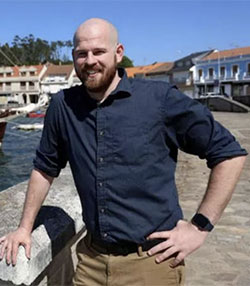
Eliot Westdorp, UGA
Sociolinguistic Variation and Change among Galician-Spanish Bilinguals
Abstract:
My research examines sociolinguistic variation and change among Galician-Spanish bilinguals, with a particular focus on how prolonged language contact shapes phonetic and phonological patterns in Galicia. Drawing on sociolinguistic theory, bilingualism studies, and empirical acoustic analysis, I investigate the interaction between dominant and minority languages and the broader social, historical, and ideological factors that influence linguistic practices, identity, and language maintenance.
My dissertation focuses on the phenomenon of "seseo" in Galician and its potential decline under possible increasing influence from prestige varieties of Peninsular Spanish. Historically, Galician lacked the /s/–/θ/ phonemic distinction characteristic of northern Spanish, but contemporary evidence suggests that younger speakers in some regions may be shifting toward "distinción". Using apparent-time methodology, sociolinguistic interviews, and acoustic analysis, I examine generational differences in speech production on A Illa de Arousa, a historically isolated island on the western Galician coast connected to the mainland by bridge only since 1985. Through this case study, my work explores how language contact, age, gender, and language dominance contribute to ongoing phonological change in bilingual communities.

Sarah Wilson, University of South Carolina
Partner-Specific Alignment at the Lexical and Syntactic Levels in Interactive Dialogue
Abstract:
Linguistic alignment refers to the adjustment of verbal behavior wherein, over the course of a conversation, speakers produce increasingly similar verbal behavior, such as words and sentence structures (Pickering & Garrod, 2004). While aligning on word choice (lexical alignment) has been shown to differ depending on the current conversational partner (e.g., Brennan & Clark, 1996), there is less evidence of partner-specific alignment of sentence structure (syntactic alignment) (Ostrand & Chodroff, 2021; Ostrand & Ferreira, 2019). This dissertation study investigates whether partner-specific alignment will occur at both the lexical and syntactic levels in the context of a collaborative task-based dialogue. This study will help to distinguish between theories which attribute alignment to automatic memory mechanisms and theories which attribute alignment to communicative goals. Partner-specific syntactic alignment might serve a communicative goal only in some conversational contexts, such as conversations in the context of joint collaborative tasks.

Katrina Smith, University of Florida
A Comprehensive Description and Analysis of the Maay Maay Tonal System
Abstract:
My dissertation project aims to provide a comprehensive description and analysis of the tonal system of Maay Maay (iso:ymm), a Cushitic language spoken primarily in Somalia and Kenya. Maay Maay exhibits a highly reduced tonal system that demonstrates typologically-rare characteristics that resemble both a tonal and a stress system (Green and Smith 2024). Very little description of Maay Maay’s tonal system exists in the literature, with the majority focusing on the nominal system (Smith 2022, Biber 1982, Saaed 1982). This dissertation provides description of the tonal patterns within the verbal system and information structure constructions which have not been discussed in the previous literature. Additionally, it provides the first formal analysis of Maay Maay’s tonal system using a Cophonologies by Phrase (CBP) framework (Sande et al 2020, among others).
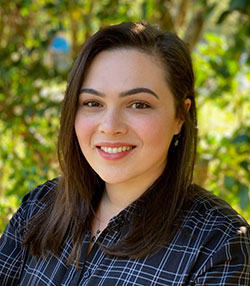
Rachel Flemming, Florida State University
The Effect of Input, Output, and Proficiency on L2 Spanish Clitic Acquisition
Abstract:
This study explores the acquisition of L2 Spanish direct object pronouns by L1-English speakers. 111 college students were placed into three groups: Processing Instruction, Meaning-Based Output Instruction, and a Control group. The first week, subjects completed a pretest with four tasks that evaluated their processing of the form; subjects’ proficiency was also assessed. One week later, groups completed a lesson and activities designed to help learn the target form, followed by an immediate posttest. A delayed post-test was administered one week later. Results are currently under analysis. They are expected to provide insight not only into the effectiveness of these instructional methods, but also into how they may be mediated by proficiency, with potential implications for differentiated instruction. Additionally, this research is situated within a broad-based theory of cognitive processing (the Modular Cognition Framework), thereby contributing to an understanding of how learners create, store, and access linguistic representation after instruction.
Past Symposiums
Video recordings are available for past symposiums.