Military Science Center serves as leader launchpad
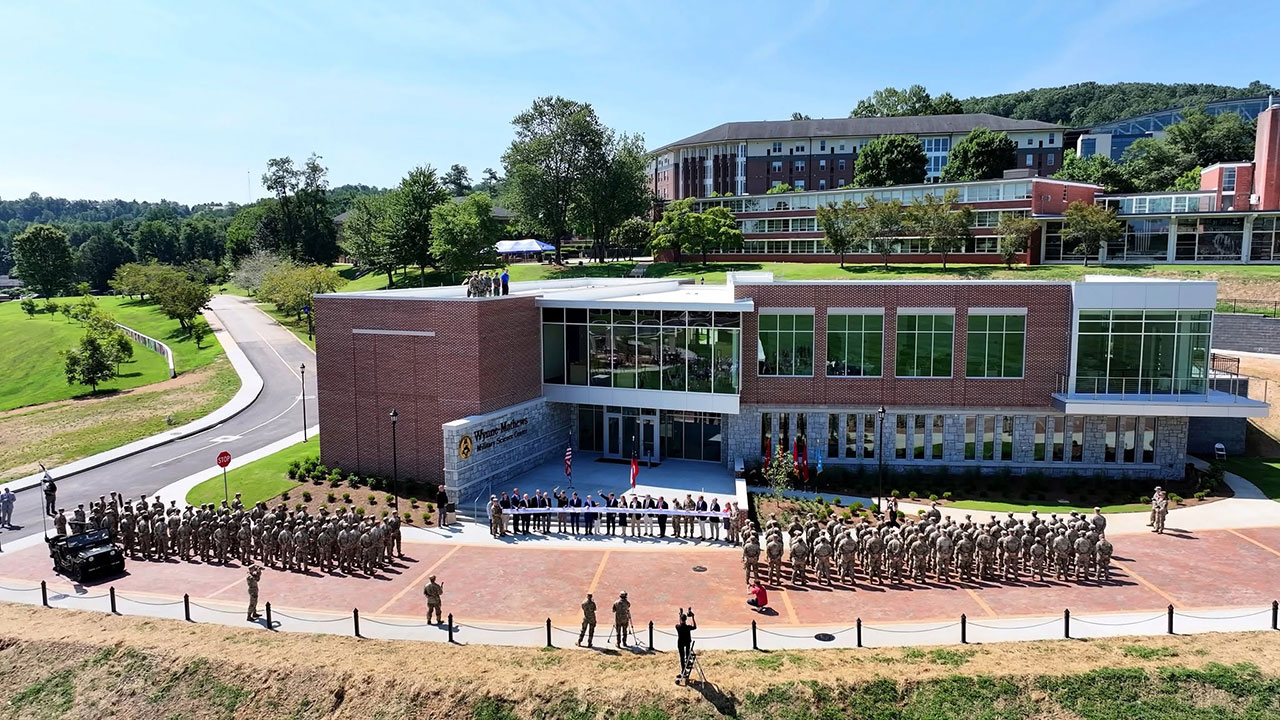
The University of North Georgia (UNG), its alumni and the state of Georgia have made a bold investment in the university's Corps of Cadets, setting the stage for a future in which the Corps prepares the leaders of tomorrow for the increasingly complex world they will enter as second lieutenants.
A July 31 ribbon-cutting for the $13.5 million, 22,120-square-foot Wynne-Mathews Military Science Center celebrated the innovative facility and the more than 200 alumni and friend donors who raised $5 million that helped UNG secure the remaining $8.5 million for the project through state funding.

The Wynne-Mathews Military Science Center provides modern, technology-enabled classrooms sufficient for teaching 1,000 cadets. It also marks the first building purposefully designed for cadet use in UNG's 153-year history. This building is named in recognition of the 22 members of the Wynne-Mathews family who attended UNG or served in the U.S. armed forces and in honor of Bob Mathews' late wife, Mary Joan Wynne Mathews, whom he met at UNG.
"For more than 150 years, young men and young women have stood on this Drill Field preparing themselves for lives of leadership and service. Generations have marched here. Each has been challenged here," UNG President Michael Shannon said. "They have learned discipline, responsibility and the importance of placing something larger than themselves at the center of their lives. They have learned the strength of America rests on the shoulders of its people, people willing to raise their right hand and sacrifice and serve."
Shannon noted the importance of balancing the past and the future. With a legacy that includes more than 60 general officers and officers at every rank in the Army, the foundation is strong.
"Will we simply preserve what we have inherited, or will we build upon that inheritance and prepare it for the demands of a new generation?" Shannon said. "At the University of North Georgia, we believe those are not competing responsibilities. We honor our history by ensuring that it remains consequential. We preserve our legacy by refusing to let it stand still."
Those remarks highlight the central premise of UNG's strategic big bet to deliver the Corps of the future.
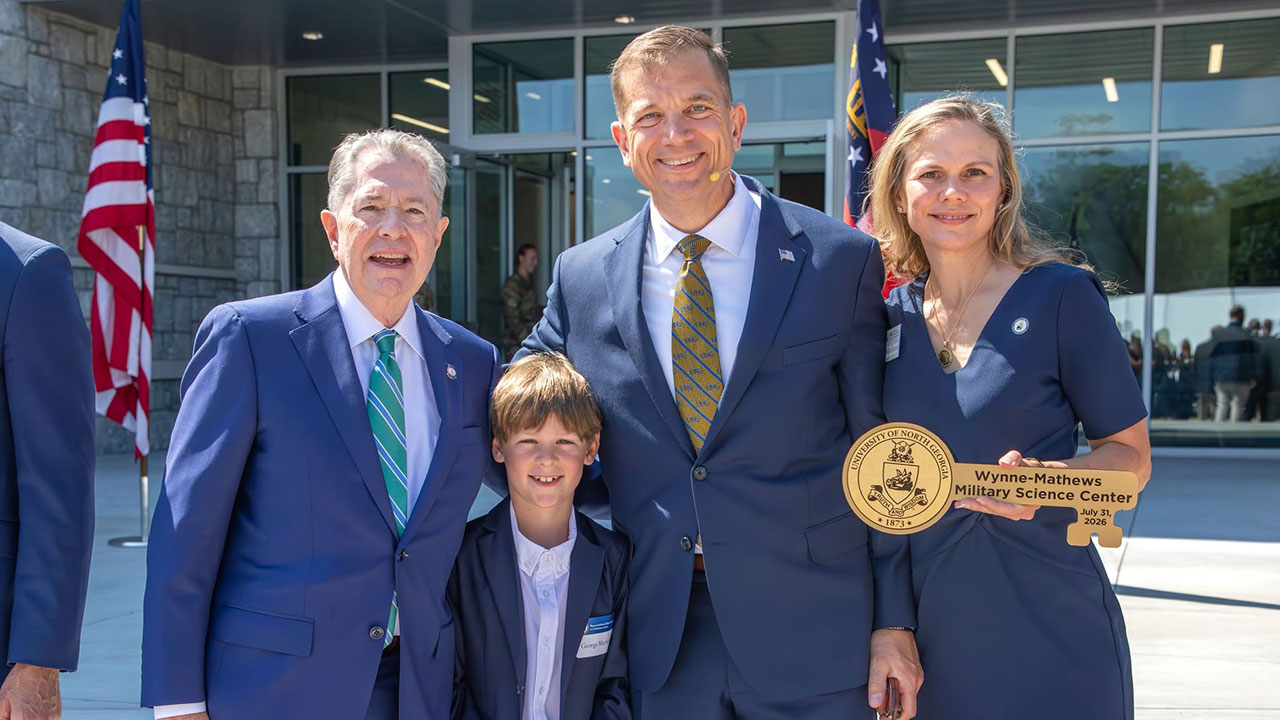
Visual symmetry was abundant as the newly opened Military Science Center overlooks the Gen. William "Lipp" Livsey Drill Field, where alumni and friends of UNG gathered under a tent to celebrate both the generations who came before and those who will in the future be trained in the same spot. Retired Lt. Gen. James Terry, senior vice president and superintendent of UNG's Cadet Leadership Academy, said the opening of the building was not an end point, but rather a launching pad for purpose for future cadets.
"That creates an obligation for every one of us. We now have to use it to transform our preparation of our cadets as they move forward to shoulder the amount of leadership that they will inherit very quickly," said Terry, a 1978 UNG graduate. "Within these walls, we will connect academic learning, the military training, physical readiness, character development, and mentorship, and we'll do that more deliberately than we ever have before."
Mathews, a 1971 UNG graduate, is grateful for the role he and so many alumni were able to play in raising funds to support future cadets. Standing in front of the new building and looking out at current cadets, Mathews marveled at the transformation that will continue to unfold in America's Corps.
"From my vantage point, this building becomes the new heartbeat of the Corps of Cadets and the physical anchor between the historic General Lipp Livsey Drill Field that we're on right now and the cadet residence halls that sit on that hillside behind the building," Mathews said. "This facility will ensure that the University of North Georgia continues to produce leaders of character who are unmatched in their patriotism and their confidence."
State Sen. Steve Gooch, who was majority leader when the project's funding was approved and is a double alumnus of UNG, emphasized the importance of private contributions in making the Military Science Center a reality.
"This building behind us did not happen by accident. It all started out with the leadership of your alumni here on this campus," Gooch said. "Thank you for all of your effort, your leadership and your true vision for the University of North Georgia and the future of this country. We could not do it without you."
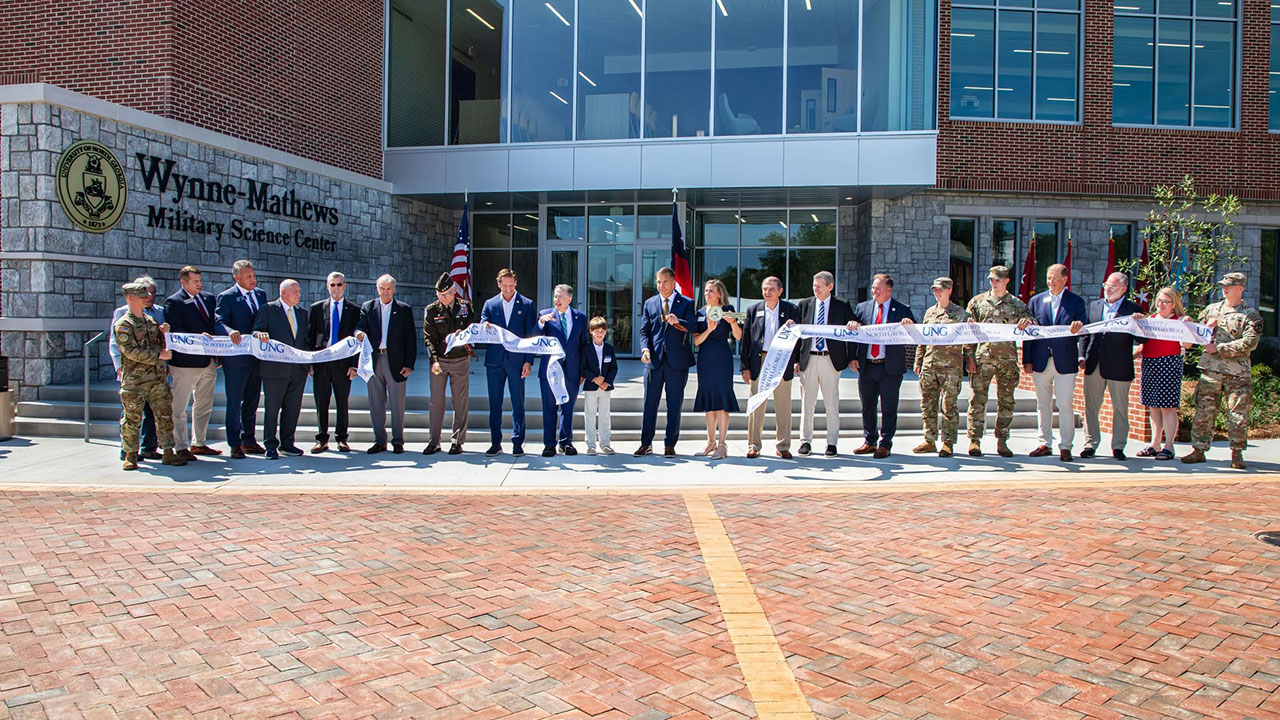
Even as the future of the world feels more uncertain, faith in the tried-and-true development of leaders of character in the Corps of Cadets remains strong.
"We're doing our best in Congress to give you the right weapons, great technologies that you'll need into the future to fight the next battles," said U.S. Rep. Rich McCormick. "But you'll have to adapt. Your leadership will have to rise up. You won't be relying on the things that happened in the past, the lessons we've learned, except for those failures that we've had. But you're going to have to have vision. You're going to have to be proactive. You're going to have to prepare your people to deal with things that nobody's ever dealt with before. That is the future."
University System of Georgia (USG) Chancellor Sonny Perdue rounded out the remarks by thanking Gov. Brian Kemp and the Georgia General Assembly for their steadfast support of the project and USG in general.
The ribbon-cutting marked the completion of a facility. The larger work, using it to prepare cadets for challenges the world cannot yet fully predict, is just beginning.
Course helps students transition to UNG
This fall, UNG is expanding UNG 1101 offerings to help first-year students take advantage of the opportunities available in college while developing the skills needed for success.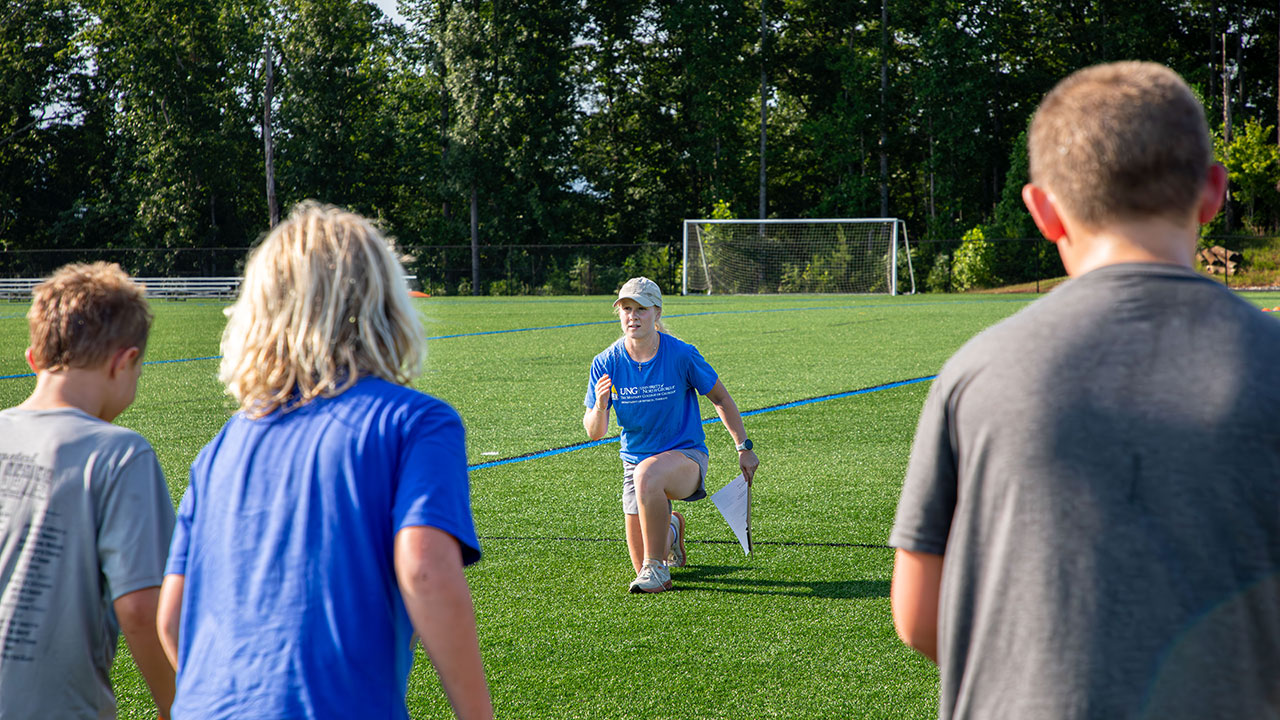
Academy allows PT students to serve
Students, faculty and staff of UNG are offering a free program this summer that offers structured training for 95 youth athletes ranging in age from 7 to 12.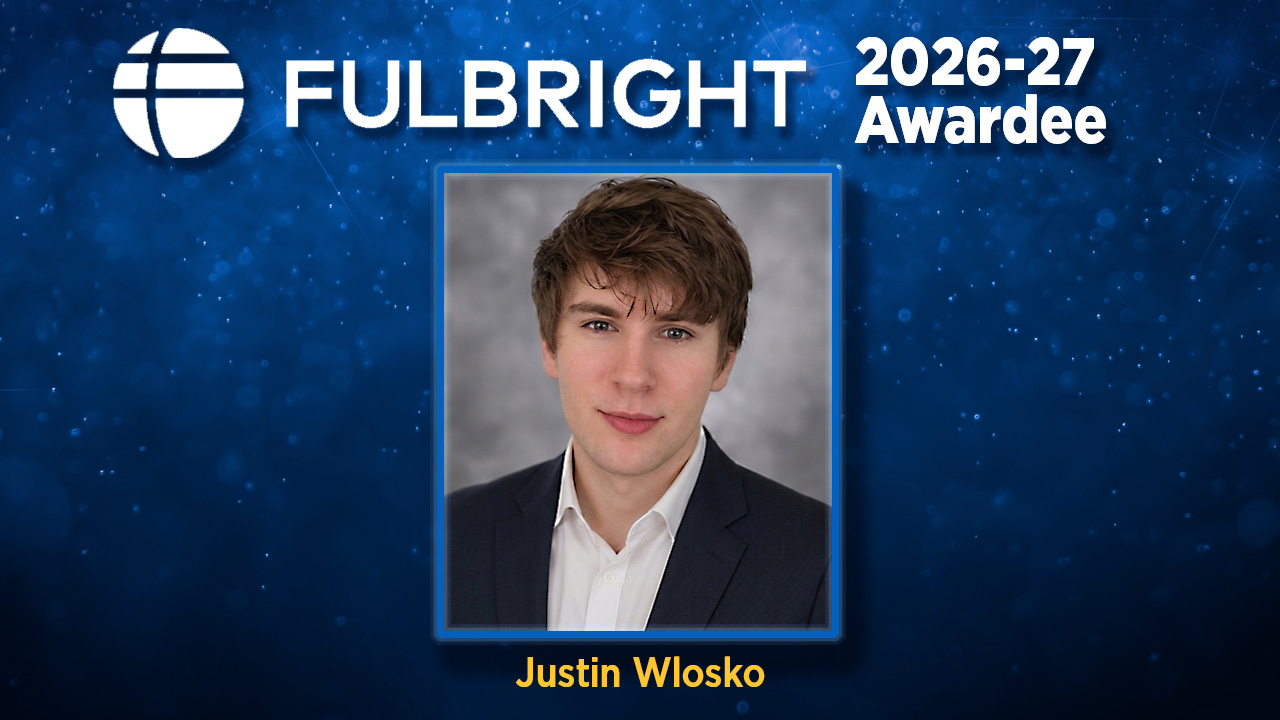
Three from UNG selected for Fulbright
Three UNG students were selected as Fulbright U.S. Student grantees. One has accepted the opportunity and will teach English in South Korea.