UNG, GATC partner for historic preservation
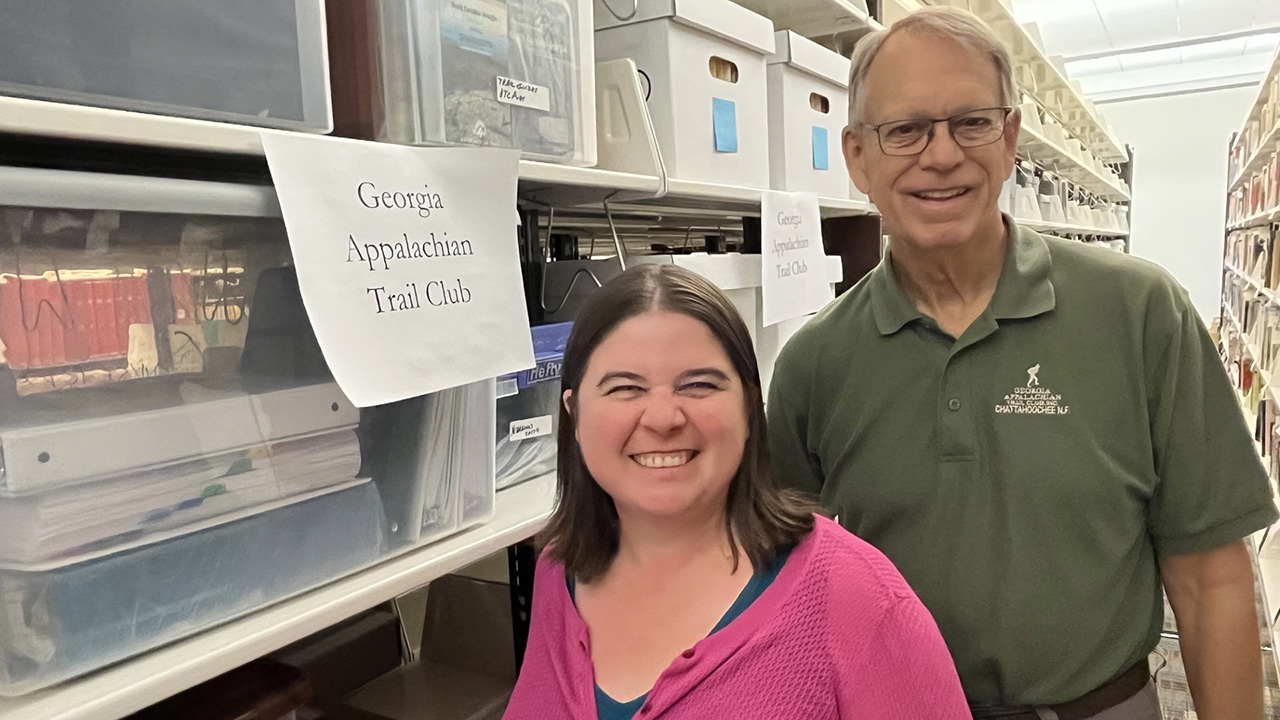
The University of North Georgia (UNG) has partnered with the Georgia Appalachian Trail Club (GATC) to house the club's history at the Library Technology Center at the Dahlonega Campus.
Jordan Shenefield, GATC History Committee chair, and Ron Hamlin, GATC History Committee member, met with UNG's Allison Galloup, head of special collections and archives, at UNG about a possible partnership in January 2024.
Hamlin said he'd looked for information on the history of the trail and discovered other states had their information stored in universities, so the effort began to utilize UNG, specifically in Dahlonega.
"Having the materials in one location closer to where the Appalachian Trail (A.T.) is, and closer to where the club was organized (Dahlonega), just made a lot more sense," Hamlin said. "Now we have it all in one location, and it's preserved in a respectful and accessible manner."
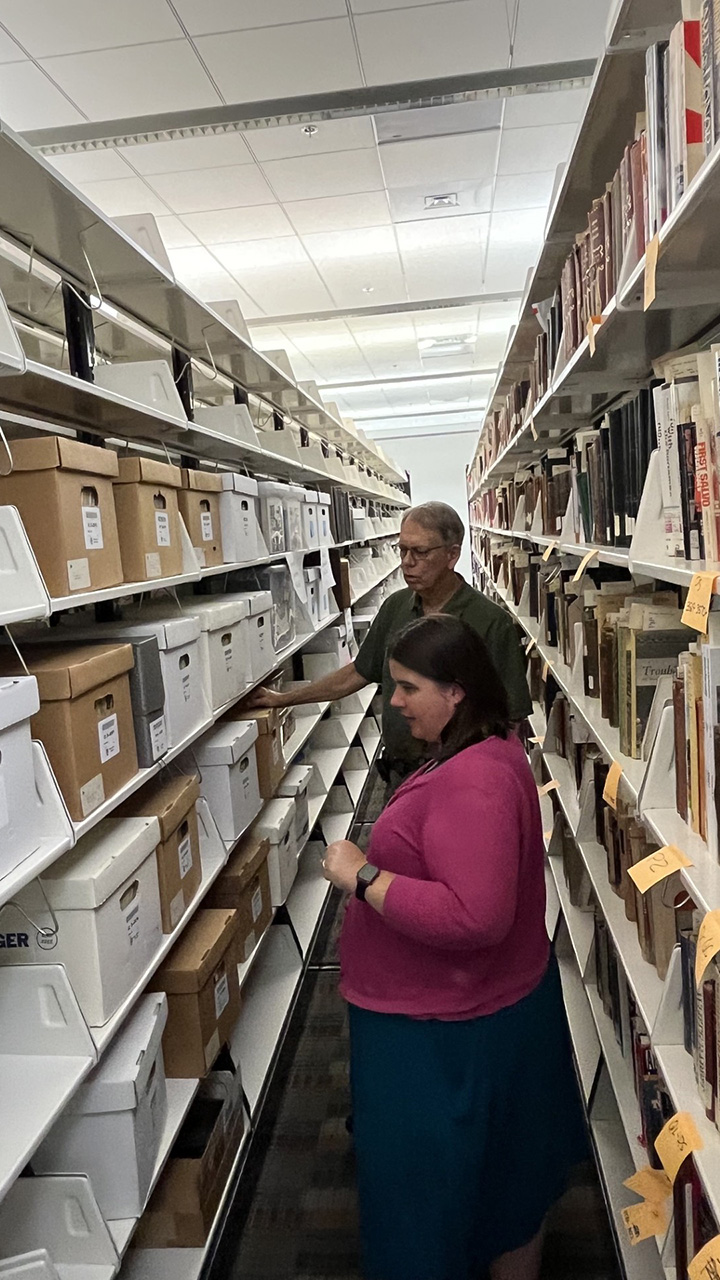
Shenefield was integral in both planning and logistics of the move.
"It took two-and-a-half years to complete the process," Shenefield said. "A legal agreement had to be drawn up. It was a process. We're here now and very excited."
The library dedicated 34 linear feet of space and is open to providing more. Stored among the boxes are a book signed by Benton MacKaye, a life-long advocate for the A.T. — a trail he first proposed in 1921. Hamlin said of particular interest are the shelter registers from the southern region of the trail, including Springer, Stover, Hawk, Gooch, and Blood mountains.
"Past hikers and hikers' families, if the hikers passed away, are interested in learning about some of their thoughts about their hike," Hamlin said.
Shenefield said that many people would also have an interest in the archives.
"Researchers, historians, authors, anyone who wants to know more about the Georgia A.T.," Shenefield said. "Maybe someone wants to write a book about how the A.T. got to Springer Mountain, that's all here now. First edition and copies of 'Friendships on the Trail' (a book about the history of the A.T.) and agreements between the National Park Service, the Appalachian Trail Conservancy, the U.S. Forest Service, GATC — all those agreements are housed here."
Items will have metadata, meaning Google searches for those key words will pop up in a search. Curious individuals will eventually be able to access information online, but for now, they will need to see Galloup by appointment. There are plans to digitize everything, making it accessible to even more people.
"To have something that is based here is important so that the folks who are going to be most interested in this are probably going to start looking here or they're going to come here on their way to the trail. We are geographically well situated, and it's just fun," Galloup said. "We don't always get collections where so many people have touched the thing or left their mark. Not all these people are from Georgia, so we have people from all over the world."

About 240 FROGS set to begin cadet life
About 240 freshmen began their time as UNG cadets Aug. 2-8 during FROG Week, which was led by cadet brigade commander Grace McGill and her team.
Regional book fair amplifies literacy efforts
UNG and the Dahlonega Literary Festival will welcome readers, writers, educators, students, and community members from across the region for the North Georgia Regional Book Fair on Sept. 12.
Special education degree launches
The UNG College of Education is launching a Bachelor of Science in Education in special education this fall in collaboration with four other University System of Georgia schools.