Alum gets paid to 'dig in the dirt'

When Samson Larsen was a little boy, he enjoyed playing in the dirt. Fast forward many years later, armed with a degree in history and a minor in anthropology, Larsen is now paid to dig in the dirt.
"I used to dig in the backyard, and it's funny, I hadn't thought about that for such a long time," he said. "Yeah, three-year-old me would be very happy with where I ended up working."

Larsen vividly remembers his first dig, during field school with the Santee Delta Project under the direction of Dr. Kendy Altizer, a UNG assistant professor of anthropology, who shared with the students that they were digging in the worst conditions.
"It was an experience. We're out in the swamp, digging holes. It's hard to top being in the swamp, flies and mosquitoes around you and working in ankle-deep water sometimes. I've worked in the heat, and I've worked in the bugs, but never in a swamp," he said. "It was a difficult experience, but I learned that it was for me. It was baptism by fire, so to speak."
The Cumming, Georgia, native is currently working in cultural resource management (CRM) as an archaeological field technician, a typical first job with Larsen's credentials, with TRC Environmental Corporation.
Under federal and many state laws, whenever a company wants to build something on federal or state land and is using federal funds, they must consider the effect of their project on cultural resources within their project area. Companies such as TRC Environmental Corporation are often contracted by other companies to assist in the process of complying with the law and they send employees like Larsen out to survey for archaeological sites and assess their significance. If sites are identified as significant within the project area, CRM companies assist their clients in finding a solution to either avoid the cultural resource by relocating the project or, if the project cannot be relocated, excavating the site and collecting as much information as possible to assist in interpreting the history of the region in which the site is located, Larsen said.
The 2025 graduate had his first taste of anthropology in a class with Altizer.
"It was interesting hearing about the actual process of going out into the field and looking at artifacts, rather than sitting in a room and writing it all up," he said. "I sort of kept that in the back of my mind as I was going through my degree, and when it came time to decide what my minor was going to be, I looked at teaching, but I ended up landing on anthropology, and I'm very glad I did."
Archaeology is traditionally a subfield of anthropology in the United States and can include digging as a way of looking at past human cultures.
"For example, the context of enslaved people, there are living descendant communities who are still around today, and we might want to talk with them and look at their culture to give us an idea of the possibilities of what we’ve dug up that might inform us better about what we're excavating," Larsen said.

Much of Larsen’s field work has been identified as Phase 1, which includes surveying to get an idea of what sort of things are in the area, and Phase 2, digging larger holes, but still considered exploratory, to aid in assessing site significance. He looks forward to participating in a Phase 3 job, which includes bigger block excavation for the purpose of collecting as much data as possible in advance of construction.
Some of the artifacts Larsen has found include items from the early 1900s such as broken glass and shards of ceramics. Most recently, however Larsen uncovered projectile points and a lot of flake debris associated with Native Americans who were sharpening their tools, as well as Native American ceramics.
"Those are the coolest things you find, the things that are actually very, very old," he said. "The artifacts make it worthwhile. I've had many days where I've been dragging, and then I find something cool, and I feel great the rest of the day."
Altizer said that she's had several students take the field school and work with the Santee Delta Project who have no anthropology experience but chose to take part after hearing about it in a class or looking at the project website.
"I have found some of my best students have no anthropology experience. They just looked at the website and they're like, 'Oh, this is really cool. I want to do this.'" Altizer said.
Peri Ripley, a 2026 graduate, holds a degree in art with a concentration in digital art and a minor in anthropology and attended field school in the Santee, too. She has completed animations for Altizer and Dr. Richard Porcher, the Santee Delta Project’s lead historian.
"She's done some great animations for me, and she contributes in that way," Altizer said. Ripley’s work is featured in conference papers and public presentations given by the Santee Delta Project Team. They provide an added visual element to the process of work conducted by enslaved people in the Santee Delta, such clearing marsh and laying in new rice fields.
Ripley participated in the field school to fulfill credits for an elective and then wound up minoring in anthropology because of the experience.
"I jumped at the chance and, while it may have been hot and humid and lots of hard work, I would absolutely go again in a heartbeat to find such artifacts as we did and learn more of the stories we heard about the people who left them behind," Ripley, a Ladson, South Carolina native, said. "It was a blast to be near Ladson again and to pull up artifacts no one had seen or touched in over 100 years."
There is no prerequisite to participate in the field school, and students can earn up to six hours of upper-level anthropology or history credit. Everyone is trained in archaeological field methods on an archaeological site and their work assists the Santee Delta Project in its mission to document, protect, and preserve the cultural landscape of the Santee Delta. Altizer said it helps if a student has taken a class in anthropology or archaeology, but it is not necessary.

Officers grew thanks to opportunities at UNG
Jaden Clark-Davidson and Brandon Clark-Davidson were two of the 20 UNG cadets who commissioned Sept. 10 as second lieutenants in the Army and Georgia Army National Guard.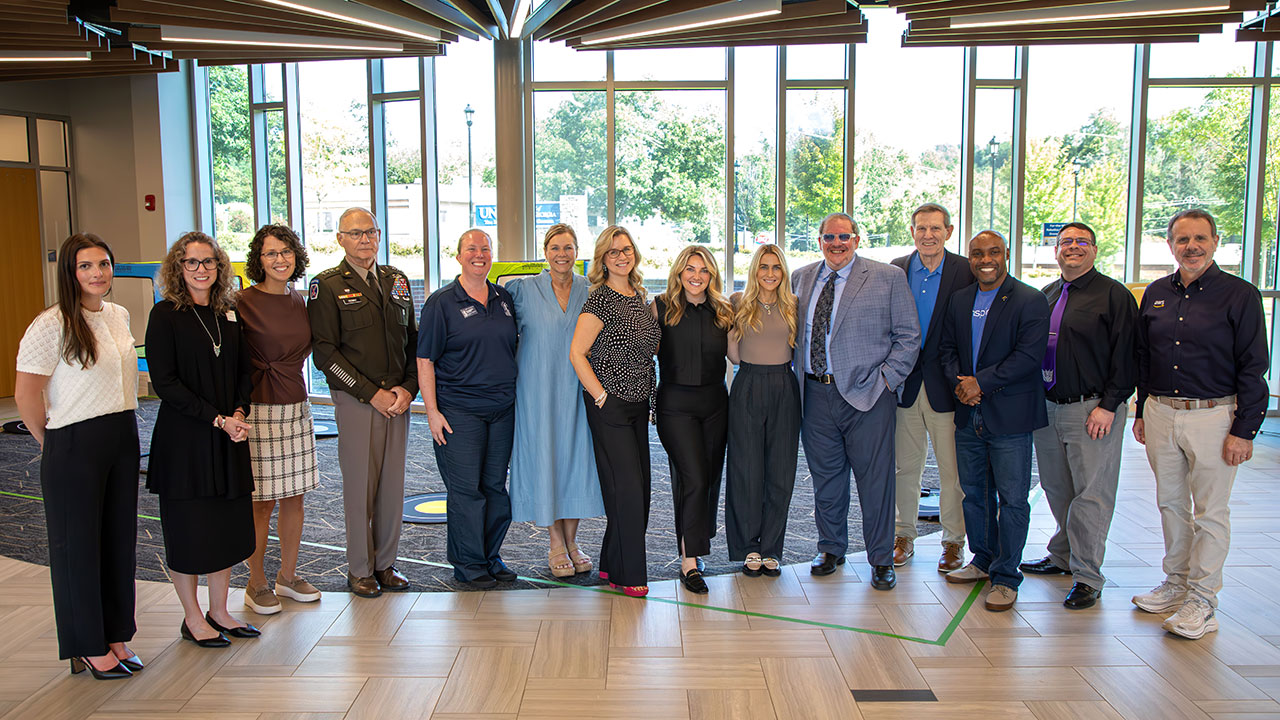
UNG prepares students to shine in evolving workforce
The University of North Georgia launched the Institute for a Future Ready Workforce on Sept. 1. Dr. Lindsay Linsky will serve as the inaugural director.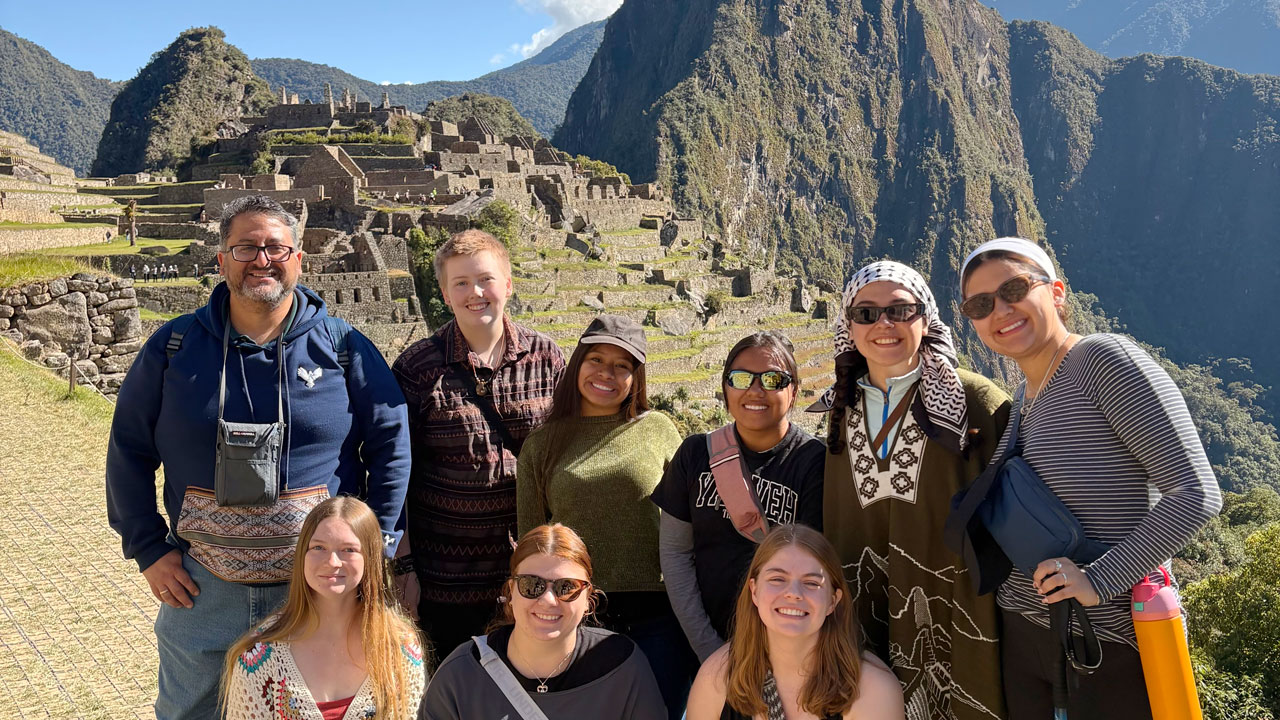
Students sharpen skills on Peru study abroad
Eight UNG students took part in a five-week study abroad to Peru this summer, gaining both language and cultural experience.