UNG hosts international intelligence ed conference
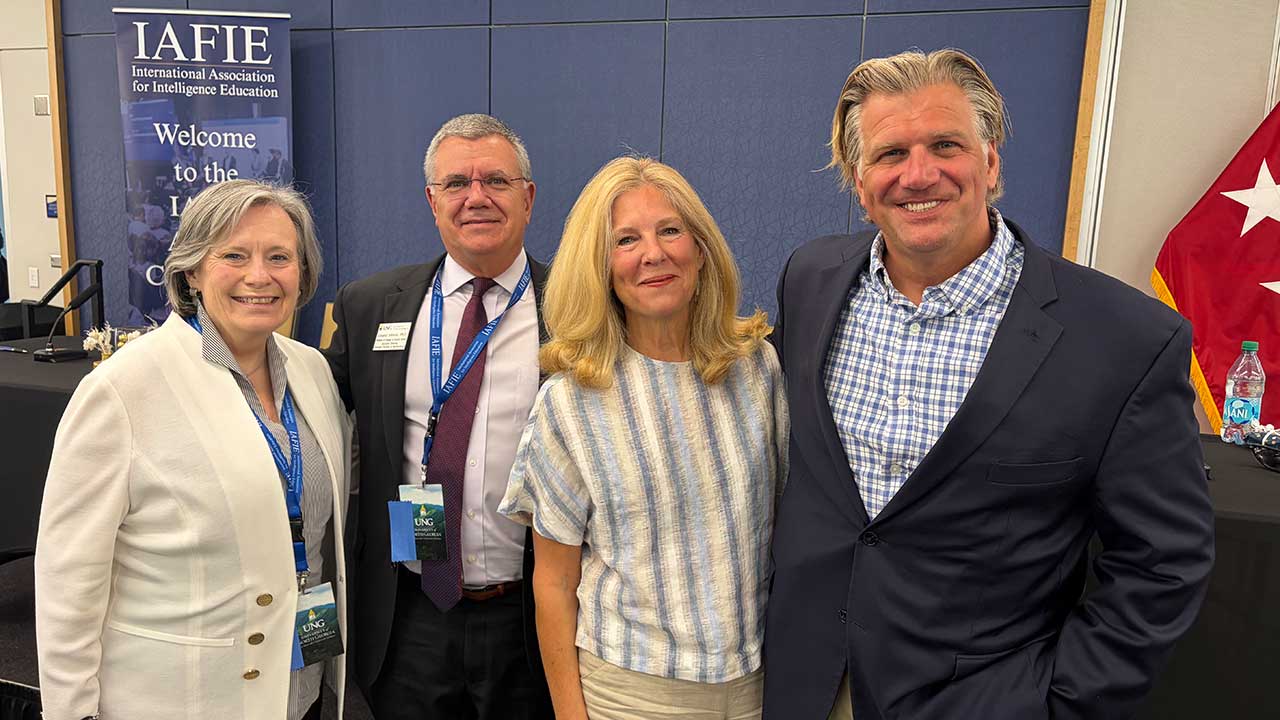
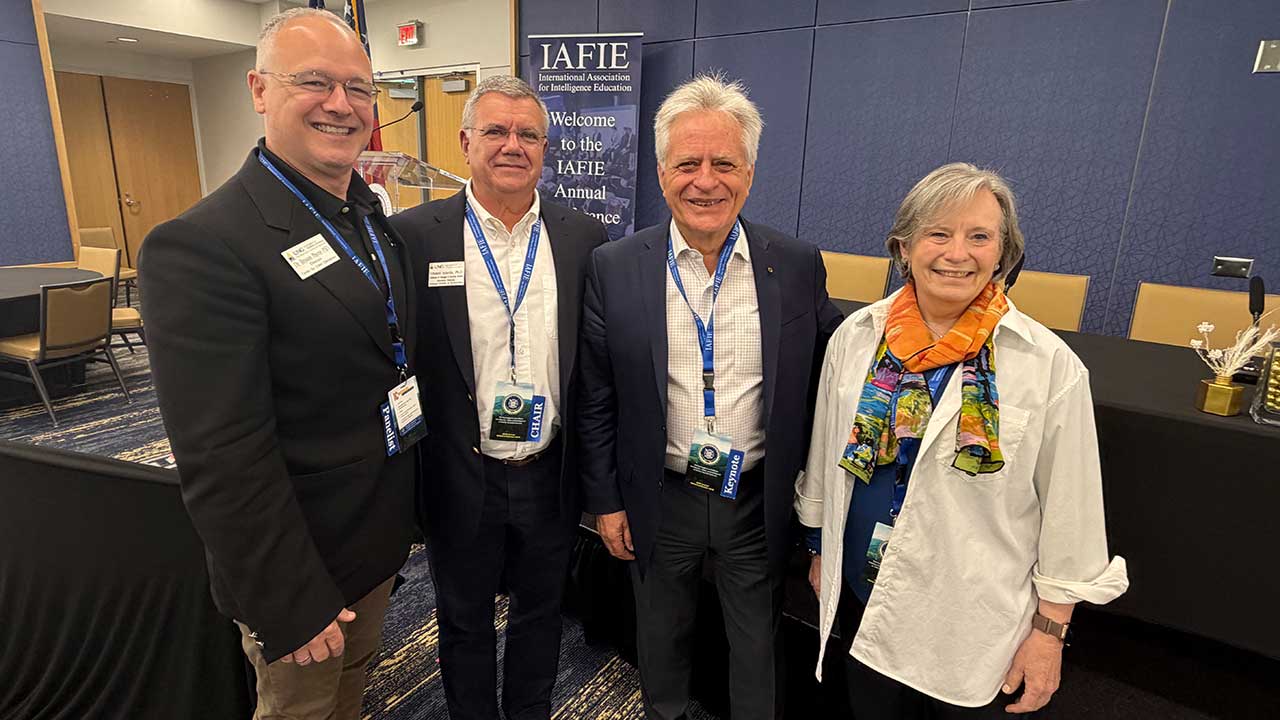
The University of North Georgia (UNG) brought together some of the world's top minds on artificial intelligence, cybersecurity, intelligence, and global security when it hosted the International Association for Intelligence Education (IAFIE) Annual Global Conference from June 1-3.
UNG has made a strategic big bet to get in the national security game, and this initiative further came to life as its faculty, staff and students engaged in the conference in the Cottrell Center for Business, Technology & Innovation. Dr. Edward Mienie, UNG professor and executive director of the strategic and security studies bachelor's degree program and partnerships, served as conference chair. Dr. Bryson Payne, director of UNG's Institute for Cyber Operations, also served on the abstract review committee.

"The diversity of topics presented here reflects the evolving operational environment in which intelligence professionals must function — an environment shaped by hybrid threats, malign foreign influence, AI-enabled deception, geopolitical competition and rapidly changing information ecosystems," Mienie said. "As conference chair, I am delighted that UNG could host the IAFIE Annual Global Conference with attendees from 20 countries participating. This conference falls within the bull's-eye of the national security strategic big bet. Feedback received from many attendees, including keynote speakers, overwhelmingly spoke of the excellence in planning and executing this conference in addition to the high quality of presentations made by panelists."
Some speakers explored the importance of leveraging intelligence tools in ethical ways that can stand up to the public scrutiny inherent in a democracy in the 21st century. Others noted the security risks posed by artificial intelligence models that are run by adversaries.
"IAFIE's mission is to advance the field of intelligence education, and UNG provided the perfect environment to do just that. Dr. Eddie Mienie, Dr. Rose Procter, and the entire UNG team went above and beyond to deliver an exceptional conference," IAFIE President Kathy Pherson said. "The insight, academic energy and world-class hospitality we experienced in Dahlonega have set a remarkably high standard for future IAFIE gatherings."
The conference also delved into the importance of industry and governments working together to support national security interests. Another topic was the importance of communities of practice pooling their resources to create timely, actionable intelligence that can thwart threats.
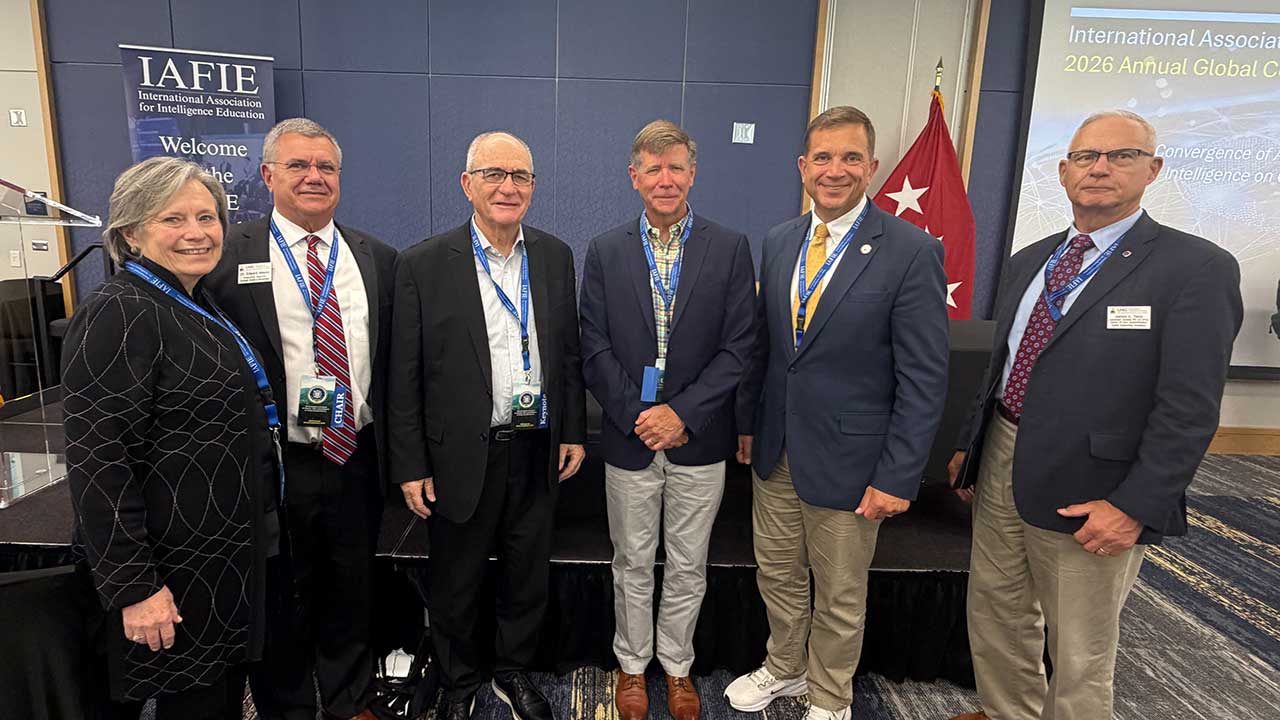
Retired Lt. Gen. Stephen Fogarty, a 1983 UNG graduate and senior executive advisor for Booz Allen Hamilton, highlighted recent research on Chinese AI large language models showing the risks these models present in the national security space.
"The 2026 IAFIE Conference hosted by the University of North Georgia presented an ideal multi-discipline forum for intelligence practitioners and educators representing over 20 nations to exchange ideas, foster relationships and enable professional development. The conference theme was exactly right — timely and relevant to the exact challenges we respond to every day," Fogarty said.
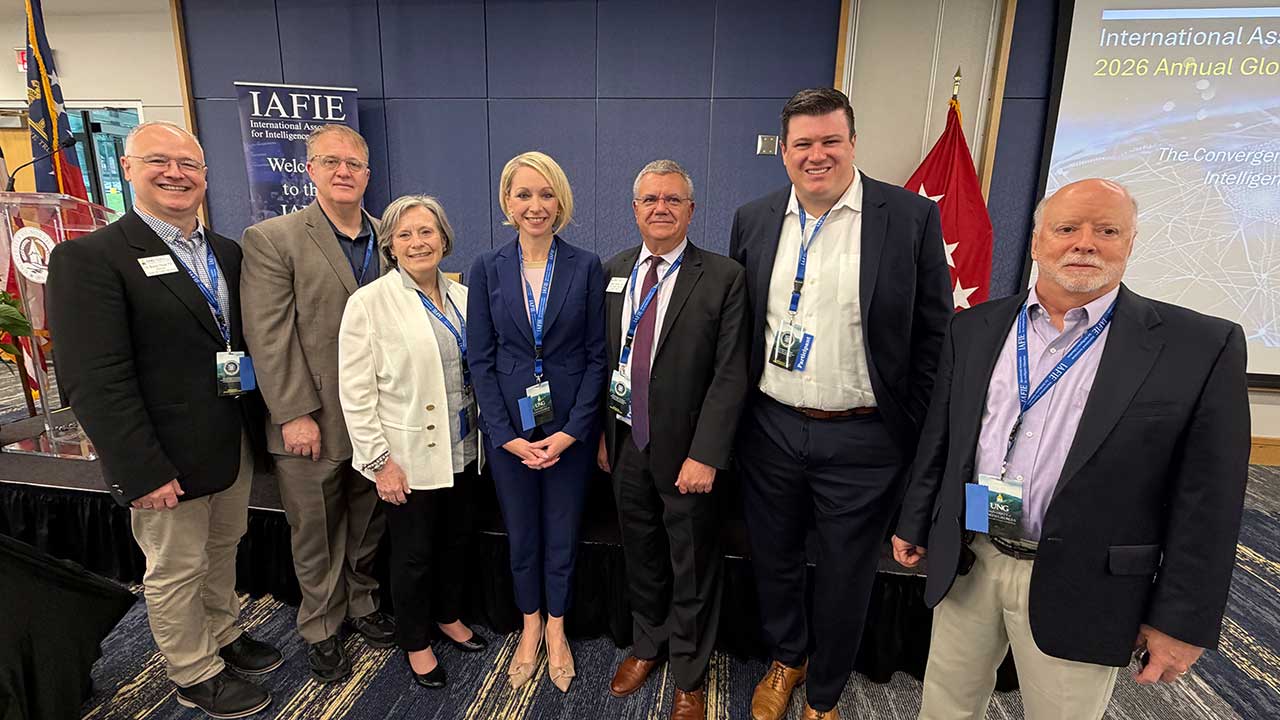
Gilat DataPath served as the conference sponsor, and DataPath President Nicole Robinson served as one of the event's keynote speakers.
"With any conference bringing together a diverse base of industry, international government officials, educators, and students, the true measure of success is in the learning and advancements made through the rare dialogue bringing these parties together. For IAFIE, the level and volume of questions stemming from each session was unlike any other intelligence-focused exchange I've been privy to in industry," Robinson said. "The challenge now will be to build on what was learned and apply it for the greater good of our respective communities and end users. It was truly a compelling few days and thought-provoking event, one that could benefit from a larger stage and megaphone to further maximize the impact."
Andrew Borene, executive director at Ocient National Security Solutions and former senior intelligence official at the Office of the Director of National Intelligence, served as one of the conference keynote speakers.
"We live in a time of massive shifts in global geopolitics and digital transformation as data volumes explode and artificial intelligence now impacts every facet of human life. Adapting a global security workforce for this future is not just an allied government challenge; it's a curriculum mandate for higher education in the free world. IAFIE's academic members drive that direction with how they teach foundational intelligence tradecraft," Borene said. "By bringing together international professors, researchers and technology firms, this group is doing heavy lifting to ensure future intelligence professionals have the needed skills, agility and ethical frameworks to thoughtfully preserve free-world values and human rights in this dynamic security environment. It was an honor to share the stage at the University of North Georgia with so many great academics and policy leaders."
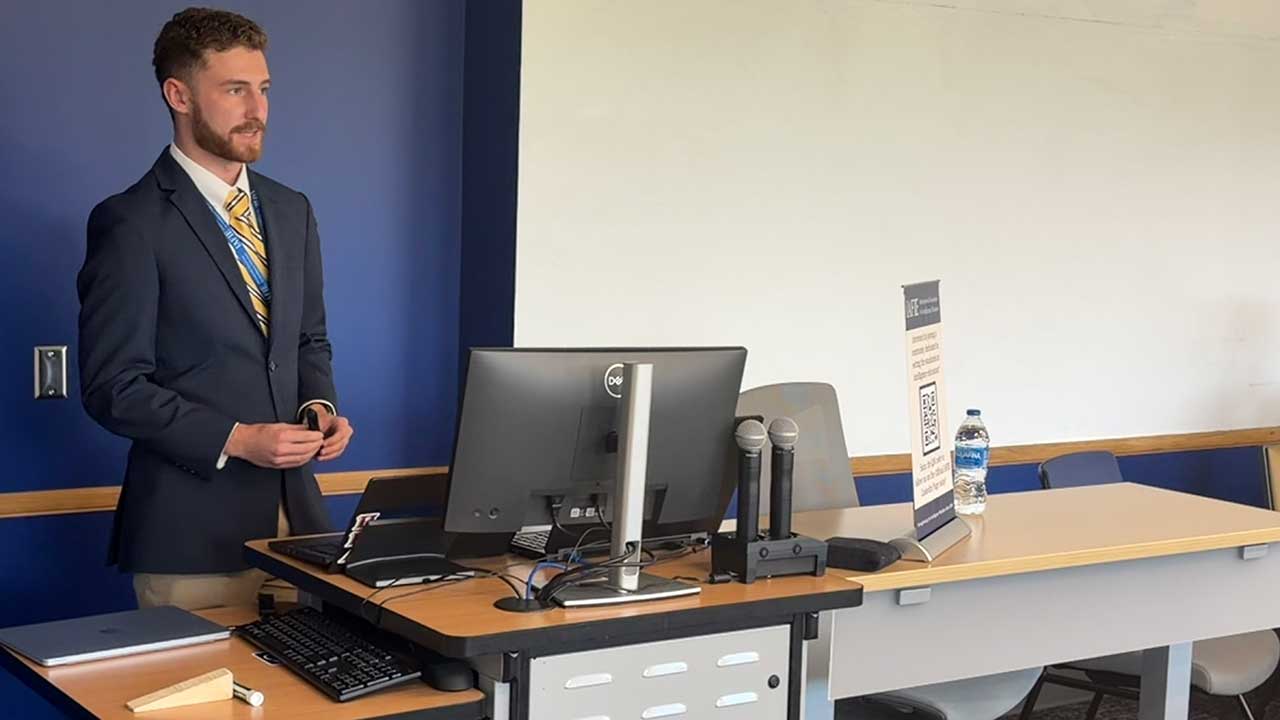
Jacob Levy, a May graduate from Fort Worth, Texas, with a degree in strategic and security studies with an intelligence concentration from UNG, flew back to Georgia to present at the IAFIE conference. His presentation outlined the connection between cybersecurity and combating targeted, automated sextortion schemes that use artificial intelligence.
"The strategic and security studies program is incredible. I'm glad that I found it and could contribute to it at a conference," Levy said. "I don't know how often I'll be able to do something like this. And being able to do it fresh out of college is great."
Jacob Jones, a junior from Dawsonville, Georgia, pursuing a degree in strategic and security studies with an international affairs concentration and a minor in Russian, took advantage of the chance to network with people in his field.
"I was honored to be able to attend a conference like this," Jones said. "It was great to meet people who have experience in the field. They were able to point me in the right direction."
Students excel in Japanese Speech Contest
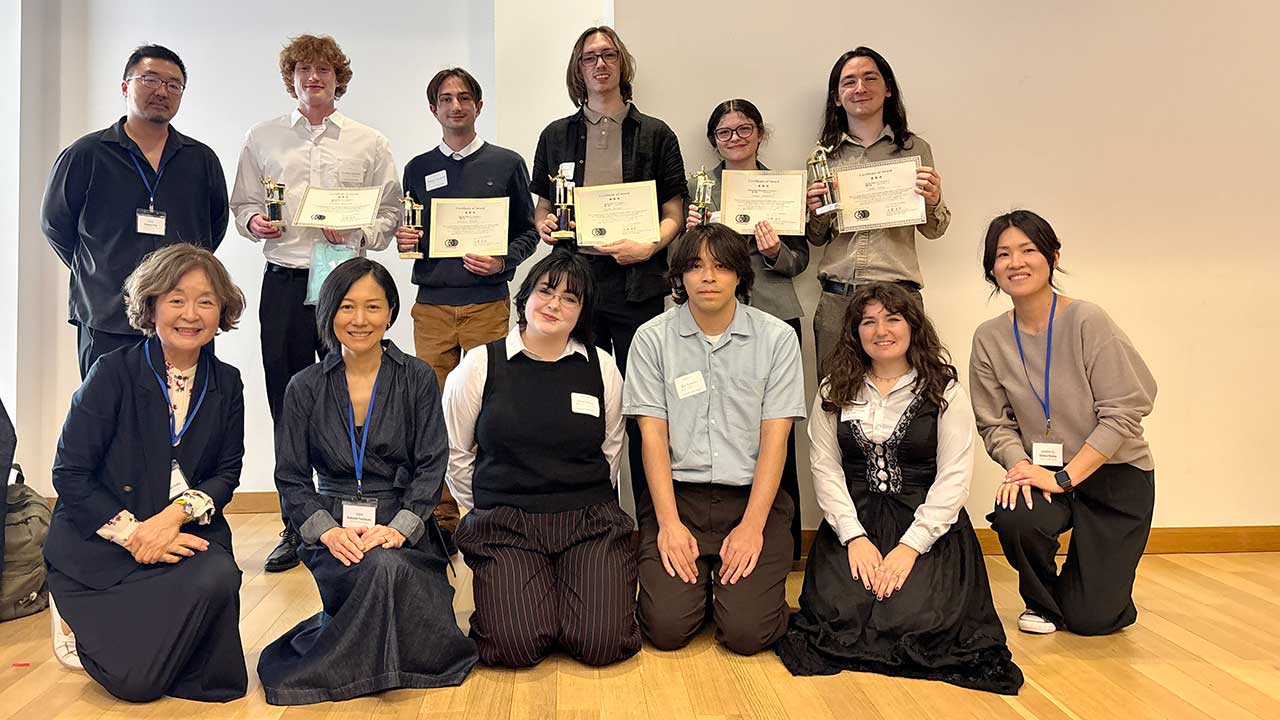
Students from UNG made a strong showing in the annual Japanese Speech Contest in Atlanta, Georgia, this spring. A first-place finish was one of four top-four results.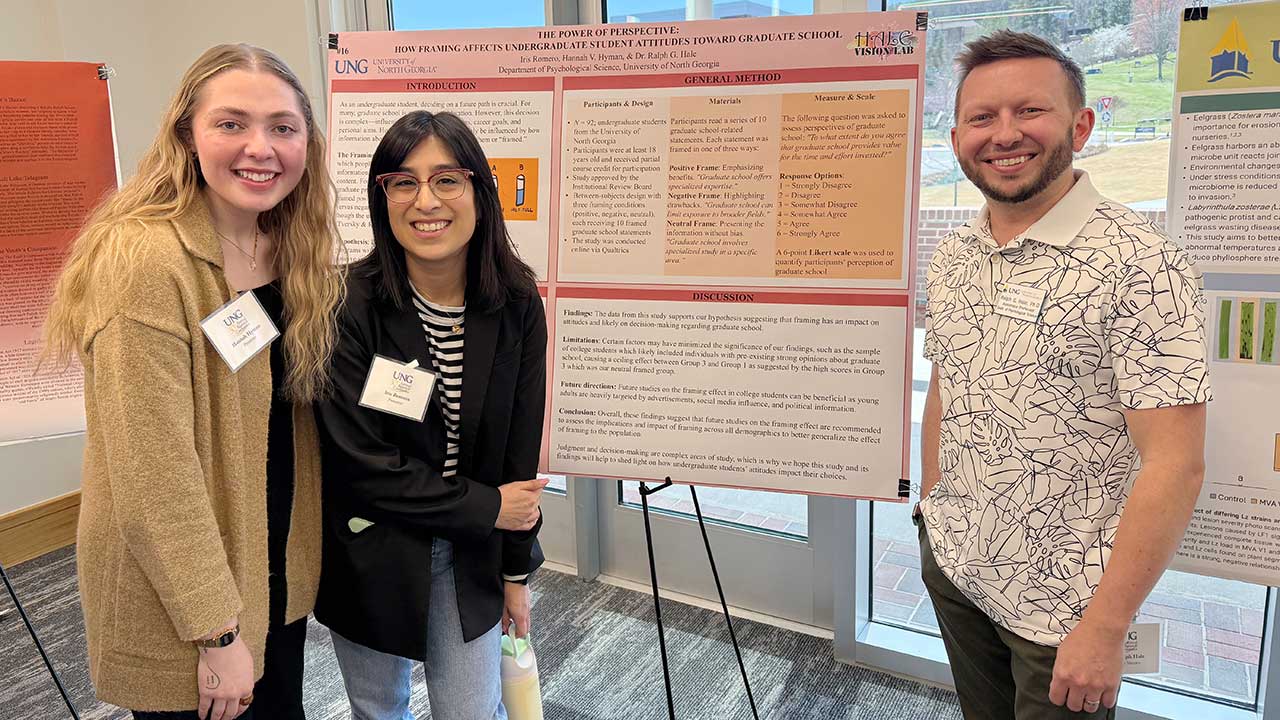
Research looks at impact of grad school framing
A UNG alumna and student partnered with their psychology mentor to publish a research article on the importance of framing in students' perceptions of graduate school.
Students create mural piece by piece
Thirteen UNG students painted mural cloth panels that made up a 44-foot-long mural that was later installed at the Avita Community Partners Behavioral Health Crisis Center in Gainesville, Georgia.