Students research network security
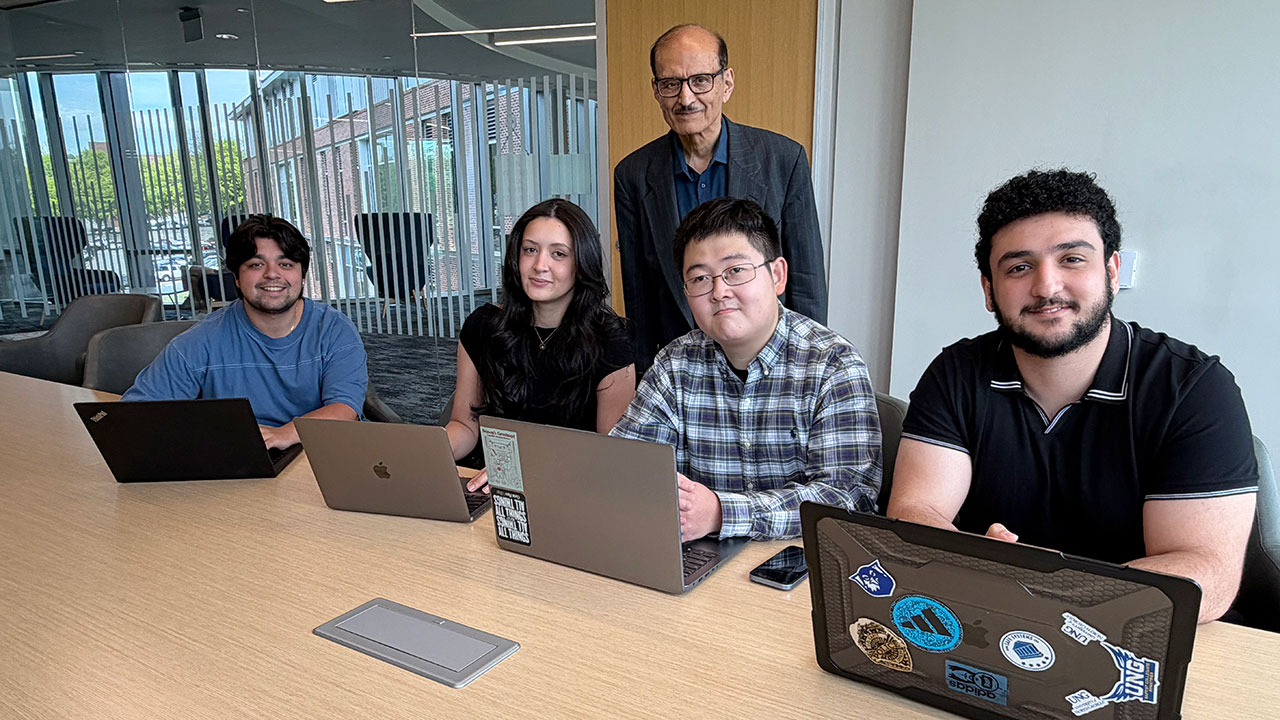
Five students partnered with Dr. Ahmad Ghafarian, a University of North Georgia (UNG) professor of computer science and cybersecurity, on the application of machine learning algorithms to network security research projects during the 2025-26 academic year. The students said the experience is setting them up for success in their future careers.
Gabryella Barnes, a December 2025 graduate from Clayton, Georgia, with a bachelor's degree in computer science and a minor in cybersecurity, researched whether machine learning could help detect ransomware before it infects a computer. She also tried to see if the machine learning models could distinguish between ransomware and benign samples. Barnes published an article in the Journal of Cybersecurity and Privacy with Ghafarian in April on their work.

"Research was not really a part of my plans before this. My plan was to be a software engineer with a focus on security," said Barnes, who is a First-Generation college student. "Now I really love the world of research and contributing to it. I want to not just learn new things, but also create my own ideas and put them out into the world. Having somebody guide you and show you the steps, it's very helpful."
Jiayong "Richard" Zheng, a Sugar Hill, Georgia, resident pursuing a master's degree in computer science, previously earned a bachelor's degree in computer science in December 2024.
His research is using machine learning models to detect potentially fraudulent anomalies in insurance.
"Working with Dr. Ghafarian gives me a really good hands-on opportunity to practice machine learning," said Zheng, who is also a First-Generation college student.
Xavier Alvarenga, a Flowery Branch, Georgia, resident who graduated in May 2026 with a bachelor's degree in computer science and a minor in cybersecurity, conducted a forensic investigation on Facebook Messenger and its data to detect vulnerabilities. His research with Ghafarian has helped him see how to explore important problems and prepare for a master's program in cybersecurity.
"This is a great opportunity to open these doors," Alvarenga said. "Working with Dr. Ghafarian has really helped me develop a professional sense of communication. It's been a real pleasure."
Kian Esmaeili, a May 2026 graduate from Woodstock, Georgia, with a degree in cybersecurity, examined machine learning models that could help test system updates to make sure they are secure before rolling them out to a whole company. He was inspired by the July 2024 CrowdStrike cyberattack. He said his research alongside Ghafarian has set the stage for graduate school at Georgia Tech, where he will study cybersecurity.
During the fall 2025 semester, Esmaeili and Ghafarian presented a paper titled "AI-driven update validation in endpoint security" at the IEEE Southeastern Conference, which was held in Huntsville, Alabama. The paper is published in the conference proceedings. In spring 2026, Esmaeili and Ghafarian performed research and composed a paper titled "Misleading performance in Sysmon-based machine learning: The impact of data representation and temporal structure." The paper has been submitted to the prestige EAI-endorsed Transactions on Security and Safety Journal for possible publications.
"I've learned a lot from him when it comes to research and forensics," Esmaeili said. "The work I've done with Dr. Ghafarian has been a big part of me getting admitted to Georgia Tech."
Natalie Torres, a May 2026 graduate with a bachelor's degree in computer science, worked on a research project with Ghafarian to "develop and evaluate a hybrid invoice-validation system that integrates deterministic financial control rules with supervised machine learning models to improve high-risk invoice detection." A paper on the outcome of this research is under construction.
"I am deeply committed to mentoring our students and exposing them to research projects in the fields of computer science and cybersecurity. I encourage collaborative research with the students and provide them with the required training, onboarding, experiment, and implementation of the research projects," Ghafarian said. "I believe through the research projects students learn how to navigate real-world problems, implement feasible solutions and establish professional networks to build their future careers."
UNG hosts international intelligence ed conference
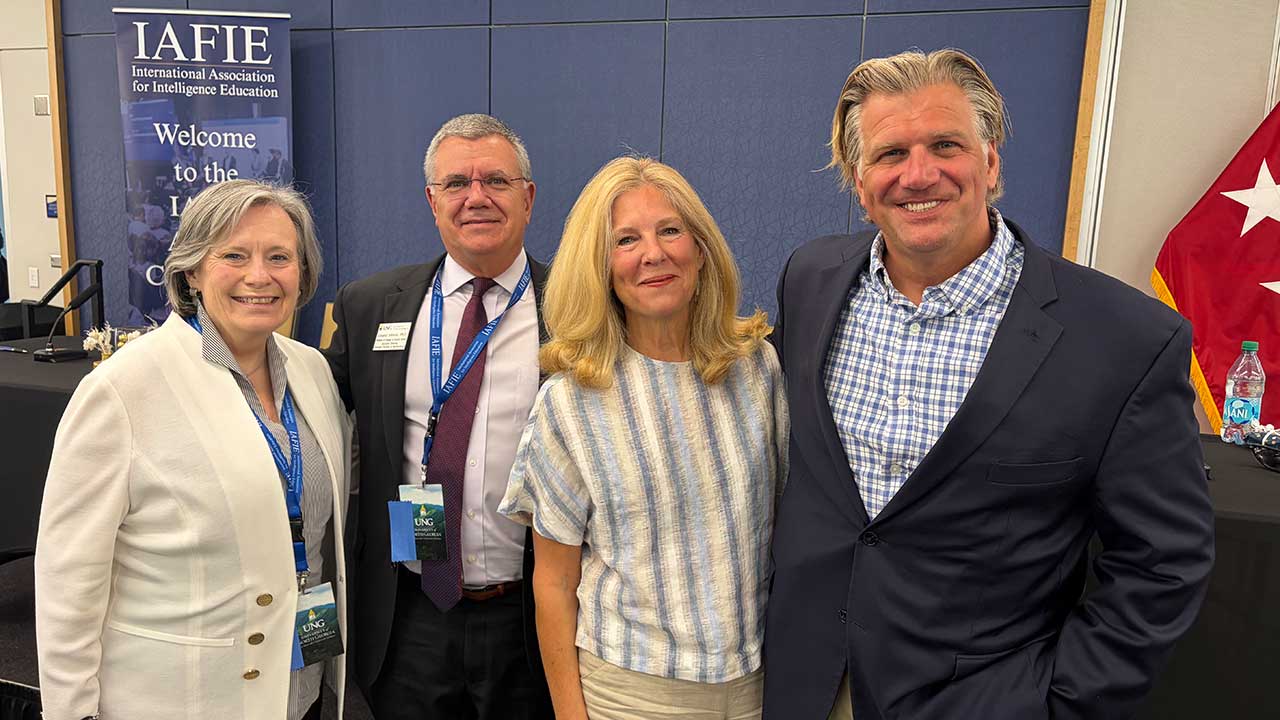
UNG brought together some of the world's top minds on artificial intelligence, cybersecurity, intelligence, and global security when it hosted the International Association for Intelligence Education Annual Global Conference.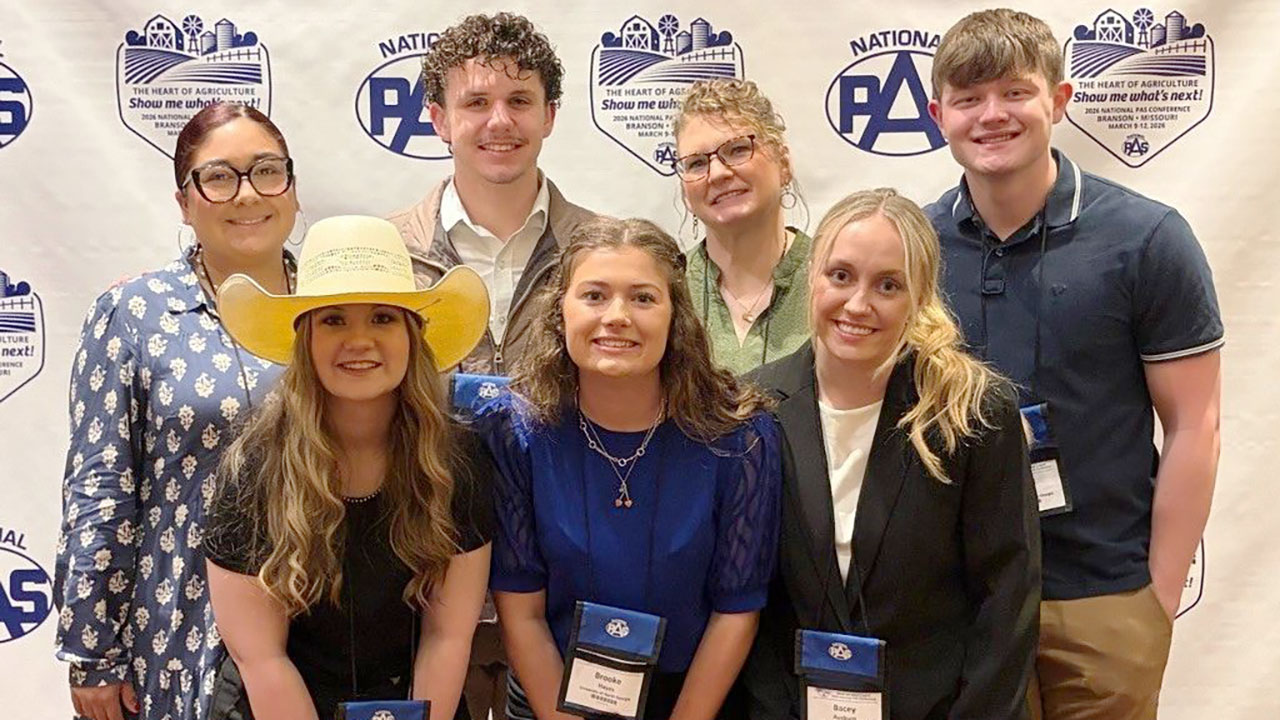
Students place at national ag event
Students from UNG turned in a litany of strong performances at the National Professional Agriculture Student Organization Conference in Branson, Missouri.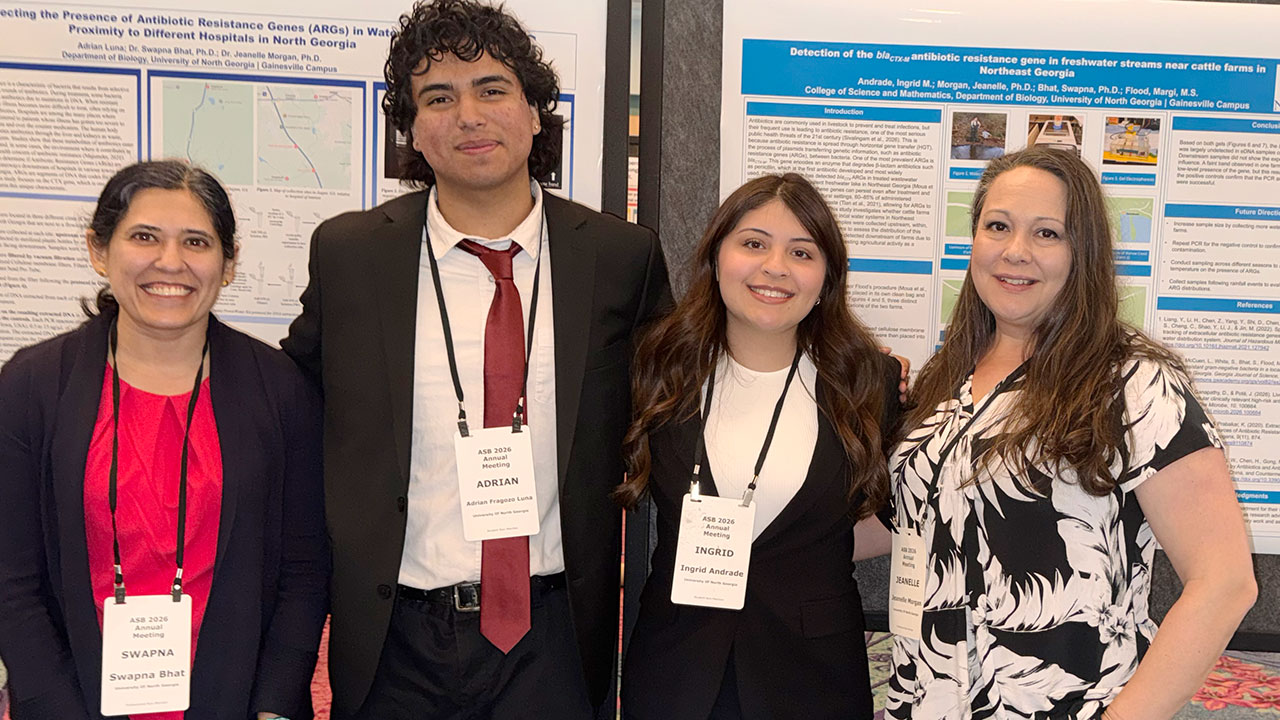
Students present at regional biology event
Four UNG students and six faculty members presented their research at the March 25-28 Association of Southeastern Biologists meeting in Mobile, Alabama.