Partnership invests in UNG poultry students
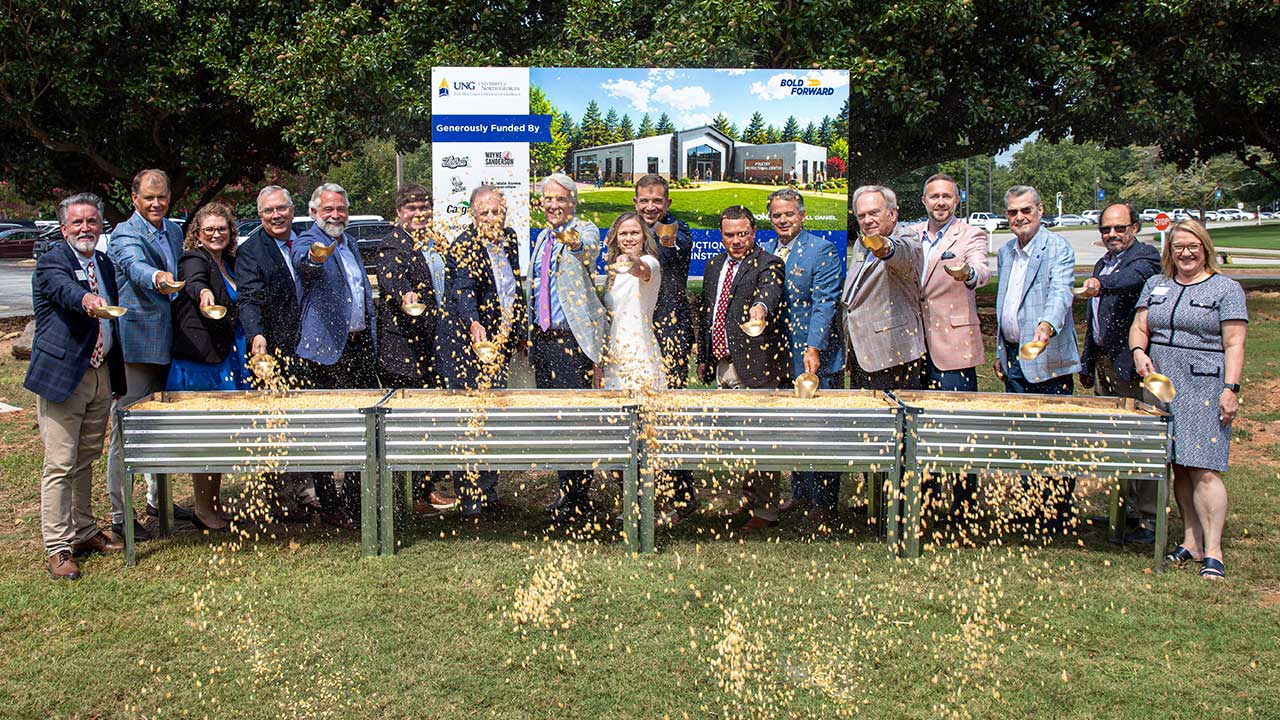
One of Georgia's most important industries is investing in its next generation of talent at the University of North Georgia (UNG).
Industry leaders, elected officials and university supporters gathered Aug. 10 at UNG’s Gainesville Campus to celebrate plans for a new poultry instructional complex that will give students hands-on experience with the technology, equipment and expertise shaping modern poultry production.

Funded entirely through industry support, the $1.95 million facility represents more than an investment in a building. It strengthens UNG’s connection to an industry deeply rooted in northeast Georgia and creates new opportunities for students to prepare for careers spanning science, business, technology, logistics, education, and leadership.
"We should be preparing the people this industry will depend upon," UNG President Michael Shannon said. "We should be creating places where students can learn in ways that are connected directly to the opportunities around them."
Tyler Harper, Georgia agriculture commissioner, noted the importance of the forthcoming facility.
"Agriculture is the bridge that connects us all, regardless of where we are, regardless of where we live. Investments like this ensure that bridge continues to sustain," Harper said. "Because if we want America to succeed for 250 more years, we've got to allow agriculture to succeed in investments like this today."
David Lathem's father, the late Bob Lathem, founded Lathem Family Farms in 1957 alongside his cousin Wilbur Ramsey. Since 1988, David Lathem has led the company, which has 1.6 million laying hens, and he is looking forward to the impact of the facility that will bear his father's name. Lathem Family Farms gave a seven-figure leadership gift.
"We're going to keep this industry going forward because that's what it's all about: paying it forward, keeping it going. So I would just like to say that our family is honored to be part of this. And this is a big thing," David Lathem said. "There are so many people who have worked hard. Companies have contributed. People have given their time and effort. But this is truly a great day for our great poultry industry, and we are so excited to be here."
It will mark the first facility intentionally designed for poultry instruction, a far cry from the cart Dr. Linda Purvis was using to transport her teaching supplies when Shannon first arrived in 2023. Purvis expressed gratitude for the transformation the facility will offer when it opens ahead of the 2027-28 academic year.
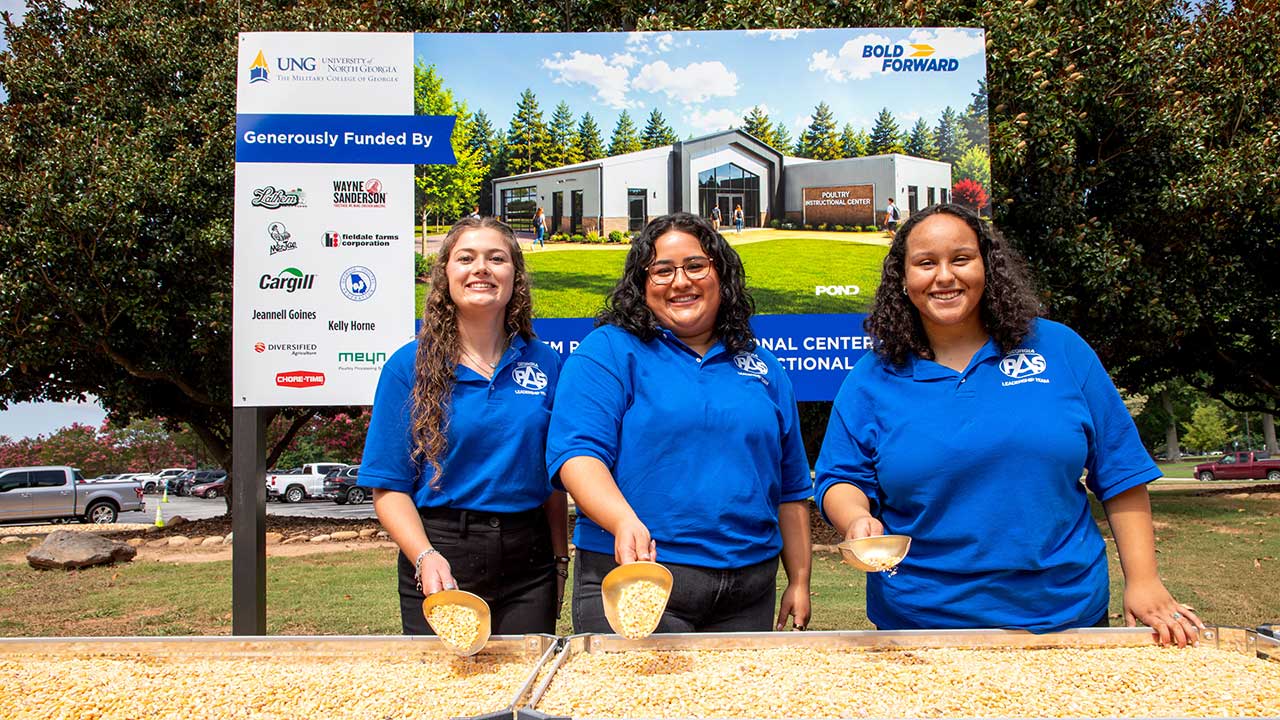
"This addition to our campus and our program will help us to recruit, prepare and equip students better than we've ever been able to before. This center will create a hub of student engagement and educational opportunities that we've never experienced," Purvis said. "The new industry teaching lab will be the heart of this building, and it will allow us to bring real-world instructional equipment and technology used in the field directly to our campus, giving our students the opportunity to learn through hands-on experience in a safe and controlled environment."
Poultry has a $40 billion economic impact annually in Georgia, and this complex will expand hands-on STEM learning and create clearer pathways from UNG classrooms into high-demand careers across the region.
"There's not a better example than the poultry industry of being a contributor to the success and prosperity and the beautiful landscape of north Georgia," said state Sen. Drew Echols, who owns Jaemor Farms in Hall County. "For generations, poultry has employed thousands of people, fed millions and created opportunities for families all across this region."
Wayne-Sanderson Farms gave a six-figure gift to name the facility in honor of Abit Massey, who was known as "the dean of the poultry industry" and died in 2024 at age 96. His son Lewis Massey spoke at the event and noted the importance his father placed on people, passion and partnerships.
"He knew that working with other institutions and organizations with partnerships was another key to the success of the poultry industry," Lewis Massey said. "So I really think that this center is going to be a living promise to the memories and the legacies of the Massey family and the Lathem family, and the students and the teachers and the faculty who will teach and learn and grow there will carry on the Lathem and Massey families' vision of what the poultry industry can be."
Michael Crump, chief operations officer of Wayne-Sanderson Farms, expressed gratitude for the chance to support UNG's poultry science efforts. He also noted that 40 leaders in the company are graduates of UNG.
"Our commitment is not just the financial donation. But we want to be a part of the success right here. Our office is just one-fourth of a mile down the road. So we feel it's important to continue to foster that relationship right here and continue to develop those students," Crump said.
Purvis, an associate professor of biology and poultry science, earned her Associate of Science in poultry science from UNG in 2000 before returning to the university in 2008 to rebuild the poultry program.
Today, UNG offers an associate degree in agriculture-poultry science that allows students to enter the industry or transfer to institutions offering a bachelor's degree in poultry science. UNG also has a poultry science business certificate for students pursuing a non-science degree. Additionally, starting this academic year, UNG is offering a bachelor's degree in agriculture education to further opportunities for agriculture in the region.
The new UNG poultry complex will have roughly 3,000 square feet with a classroom, lab and two offices. Carroll Daniel Construction is the general contractor, and Pond is the architecture firm.
Mike Giles, president of the Georgia Poultry Federation, said UNG will continue to play an instrumental role in an industry that thrives on collaboration.
"We try and work together as competitors to work together to share ideas," Giles said. "And all of this created this ecosystem, this cradle of innovation and efficiency that is the reason, I think, that Gainesville-Hall County and the region around us is the poultry capital of the world."
Employees earn awards for innovative projects
Sixteen UNG faculty and staff research projects received funding for their work through the 2026-27 Presidential Awards.
Course helps students transition to UNG
This fall, UNG is expanding UNG 1101 offerings to help first-year students take advantage of the opportunities available in college while developing the skills needed for success.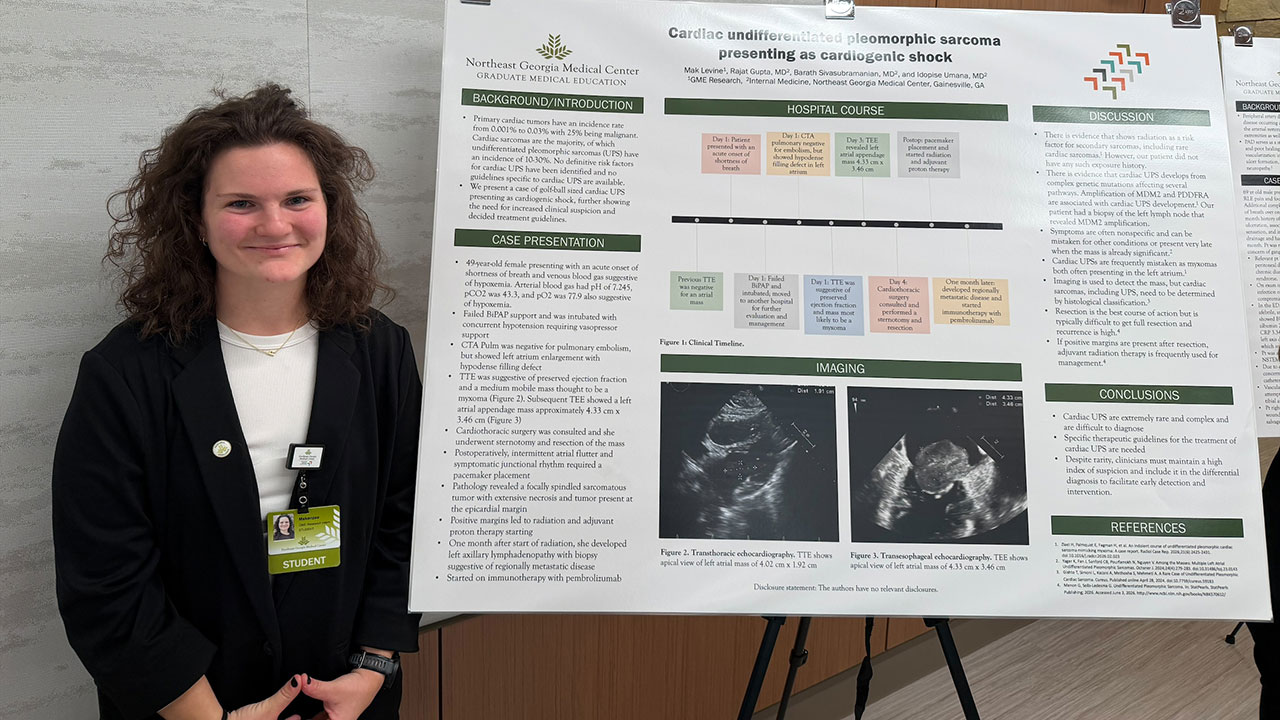
Two take part in NGMC research internship
A recent UNG alumnus and a senior took part in the six-week Northeast Georgia Medical Center Graduate Medical Education Summer Research Internship in May and June.