Student researches impact of menstrual cycle phases
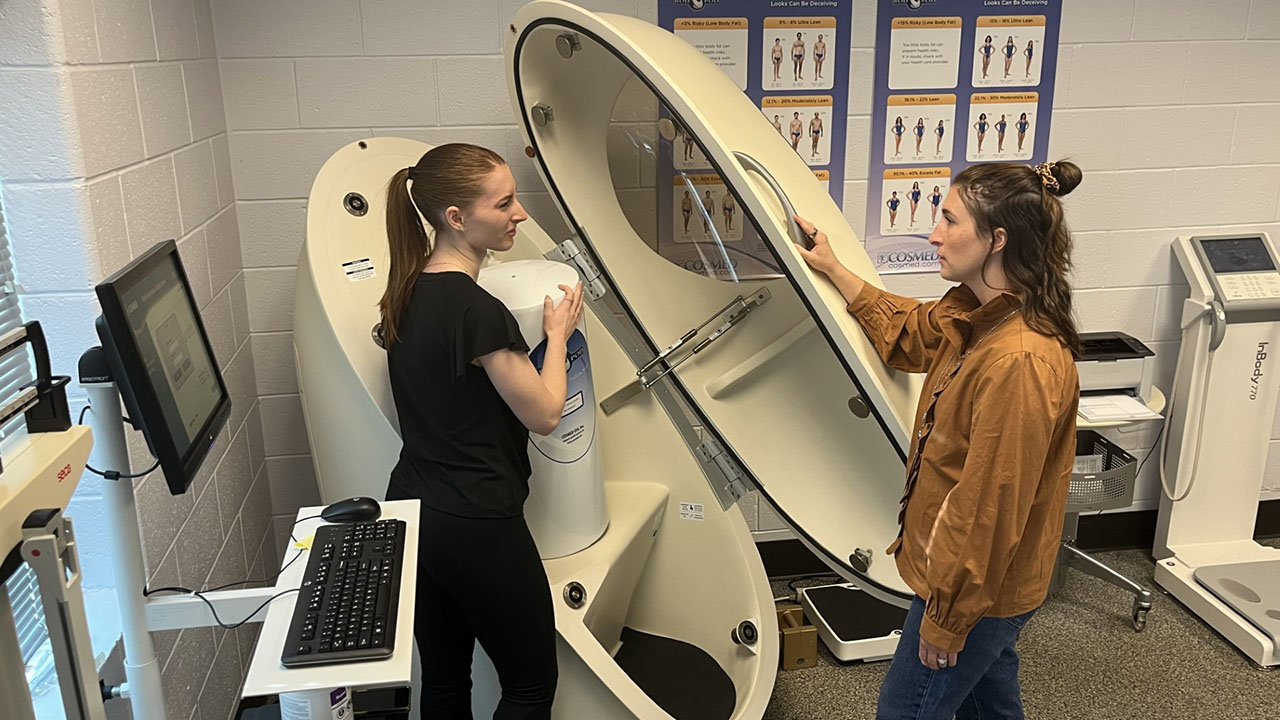
Delving into a subject that's often referred to as "taboo" and has limited scientific research behind it, student Brooke Karmilovich received a University of North Georgia (UNG) Center for Undergraduate Research and Creative Activities (CURCA) faculty collaborative mini-grant with the hope of helping others understand the impact of a woman's menstrual cycle on her physical activity levels.
Karmilovich said she wants people to know how important it is for females to be included in scientific research.

Last month, Karmilovich presented her findings at the Southeast Chapter of the American College of Sports Medicine (SEACSM) annual meeting in Greenville, South Carolina.
"It was such an amazing experience hearing the responses from other researchers that are interested in this field," she said. "Others acknowledged the significant gap in female-specific research and expressed how their projects are closing that gap as well. Overall, I enjoyed my time and am so grateful for this opportunity."
Karmilovich, a senior, was inspired by her own personal experience and that of her best friend.
"Any time we were on our period, we joked and used it as an excuse for why we couldn't lift as much or why we felt weaker, but the fluctuation in female hormones proves this experience is physiologically and behaviorally real," she said.
Under the supervision of faculty mentor Dr. Balea Schumacher, assistant professor of kinesiology, Karmilovich used the CURCA mini-grant funds of $1,000 to purchase Fitbit fitness trackers to examine variations in step count and distance during each menstrual cycle phase.
"This work has great significance in importance on the overall female population in regard to physical activity and fluctuations that may occur to physical activity levels throughout menstrual cycle phases, as well as tying in that psychological component of how they feel during those specific phases, is really important to understand. Maybe there's not a change in physical activity throughout cycle phases, but there are some types of psychological and mental well-being changes that occur that might also need to be acknowledged," Schumacher said. "It's amazing to see interest from an undergraduate student with such initiative and drive to lead and to want to help with research that will be a framework for future studies that allow for intervention approaches to be included in them."
Similar to the SHE IS lab at The Ohio State University, where she completed her Ph.D., Schumacher is creating ways for kinesiology students at UNG's Gainesville Campus to engage with research.
Participants, who had to be between ages 18 and 45, were selected based on several qualities, including birth control, meaning they need to be either on it or off it for a minimum of three months, so their body is acclimatized.
"That way we see true results and not just hormonal fluctuations. They must be recreationally trained in the gym. They will go through max testing, which will show us the participants aren’t getting new physiological changes within their body since they are trained," Karmilovich said. "We are collecting objective data from the accelerometers, telling us participant activity data and subjective data from the surveys the participants will complete after each session. If there is a fluctuation, we may investigate more hormonal outcomes in the future. There may be opportunities to branch off our observations."
Karmilovich, a Cumming, Georgia, resident, said that after earning a degree in kinesiology at UNG, she hopes to continue her research and is planning to earn a doctoral degree.
Schumacher said there is plenty of research to be done.
"Females have been very neglected in the research of exercise science and sports medicine. We know that. It's not surprising to anybody. When you look at females, there are so many other categories that need to be focused on: underserved and minority populations, females who have PCOS, athletes — recreationally trained, elites, under-trained, obese — there are so many other facets that need to be looked at. It's great to be able to do research, but doing it well and with integrity is important to me," Schumacher said.
Future educators visit state legislators
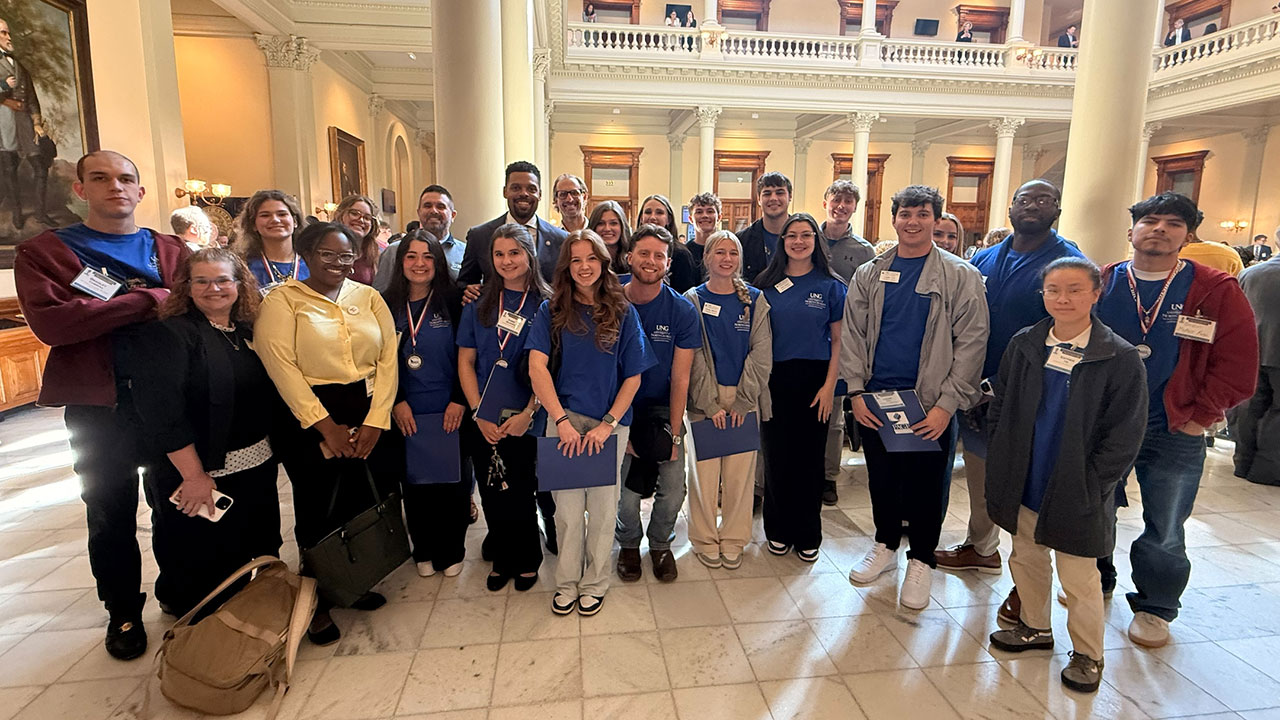
Students in UNG's College of Education had the chance to learn more about the legislative process during Professional Association of Georgia Educators Day at the Capitol.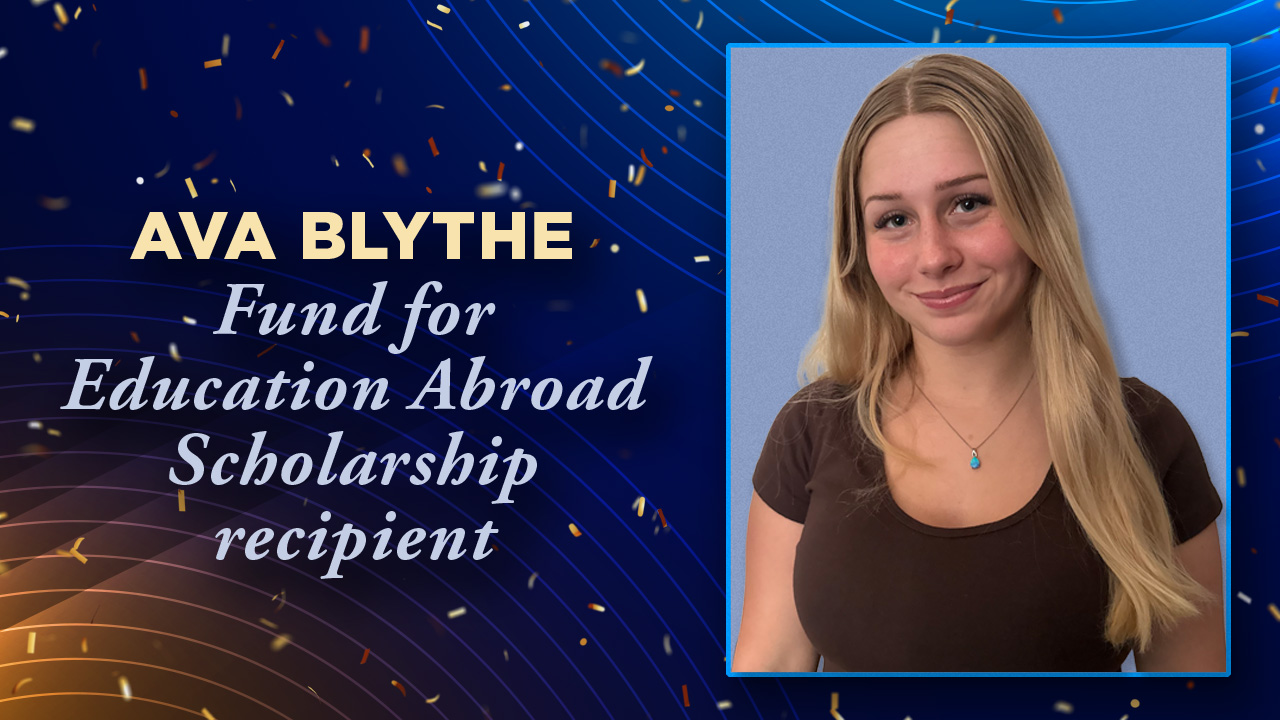
Blythe heads to South Korea as FEA awardee
Ava Blythe, who is pursuing a degree in chemistry, was awarded the FEA scholarship to study in South Korea, making her the 14th FEA awardee at UNG.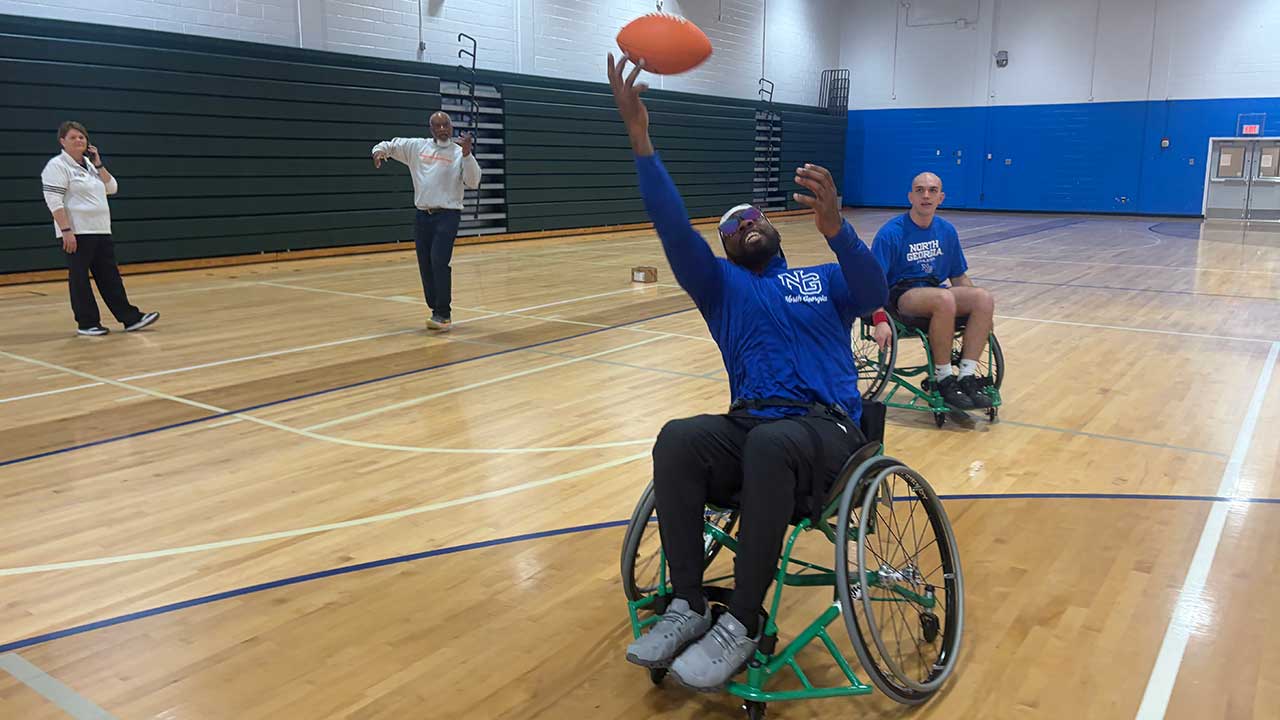
Students gain hands-on adapted PE experience
Students in UNG's Physical Education Teacher Education program had a unique opportunity to experience adapted sports so they can better serve their future students who have such needs.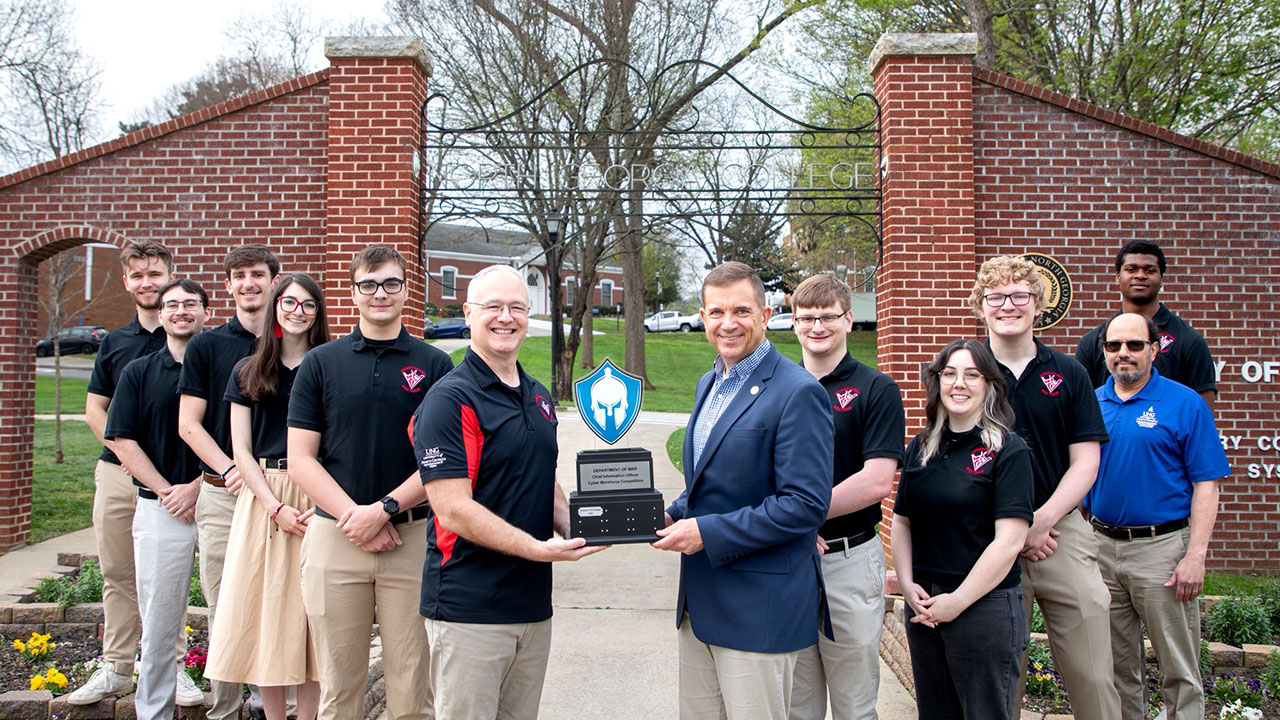
Cyber students take national title in D.C.
An eight-student team from UNG earned a national championship in the Department of War Chief Information Officers Cyber Workforce Competition at the National Defense University in late March.