STEMS scholars share research on campus
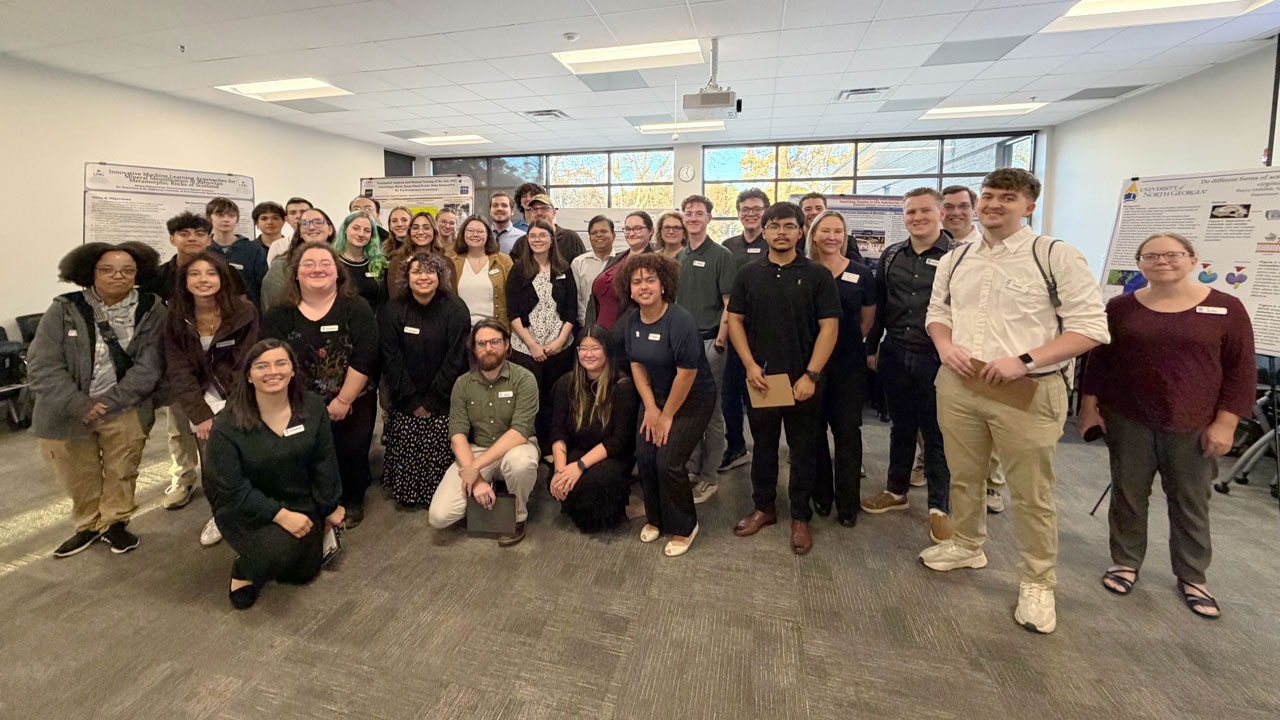
The University of North Georgia (UNG) hosted an undergraduate research conference for its Science, Technology, Engineering, and Mathematics Scholars (STEMS) Program students and some of their collaborators Nov. 14 at UNG's Gainesville Campus.
Funded by the National Science Foundation (NSF), the STEMS Program provides each scholar up to $10,000 in scholarship funds per academic year and mentoring through a $1.5 million grant.

"I'm incredibly proud of our UNG STEMS Program scholars as they shared their undergraduate research work alongside their faculty mentors at this year's conference. The goal of the event was to provide scholars with a conference experience to help further strengthen their presentation and communication skills, receive valuable feedback and continue growing as emerging researchers," said Dr. Natalie Hyslop, professor of biology and principal investigator for the NSF STEMS grant. "It also gave everyone a chance to see the remarkable range of projects our scholars are pursuing. Their dedication, curiosity and hard work were evident in their presentations, and I'm excited to see how their research continues to develop."
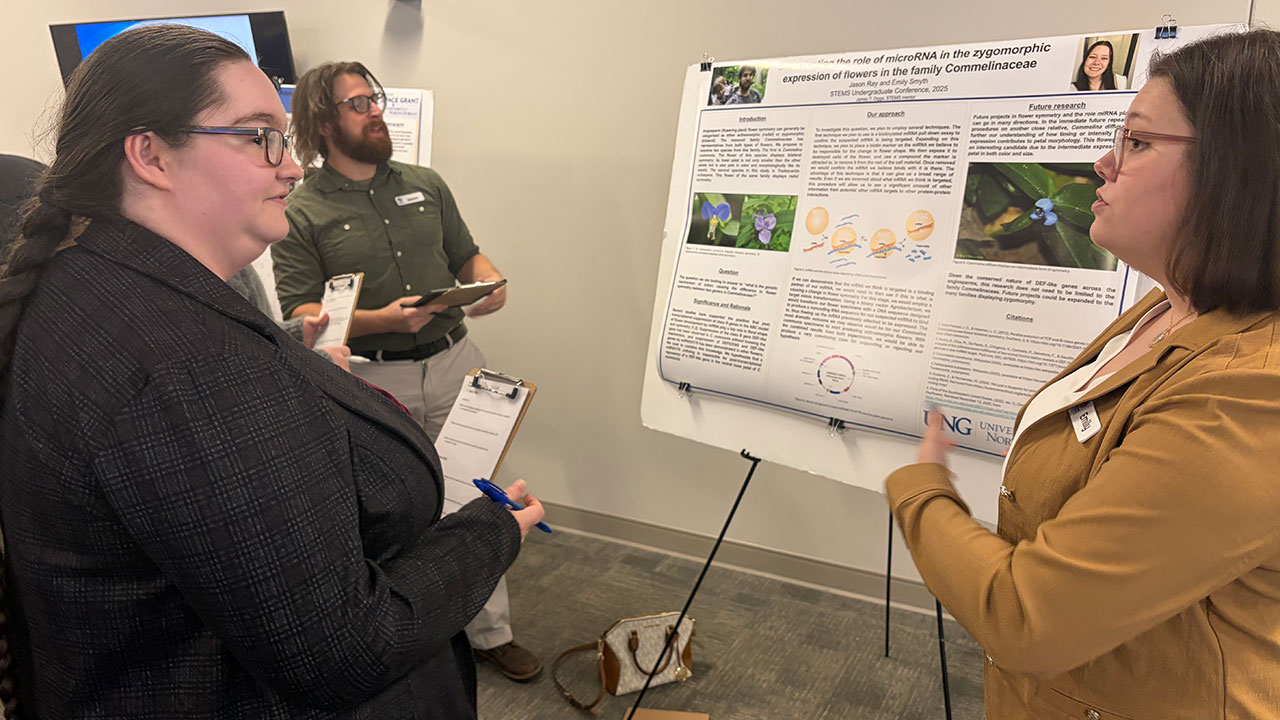
Jason Ray and Emily Smyth, who are both pursuing degrees in biology, shared their research examining if microRNA was impacting whether flower species in the same family showed radial symmetry or bilateral symmetry. Dr. Tom Diggs, professor of biology, served as their STEMS mentor.
Ray, a senior from Suwanee, Georgia, said the STEMS scholarship has made it possible for him to pursue his education in a timely manner as a father of three. He started the research about a year ago and was joined this semester by Smyth, a fellow STEMS scholar from Duluth, Georgia. Ray previously worked installing auto glass before finding his new career interest at UNG.
"I didn't know I would be so passionate about science until I started it," Ray said.
Smyth enjoys the lab work as she is preparing to apply for master's degree programs in genetics.
"The skills I'm having to learn for this research will translate directly to what I'm going to do in graduate school," she said.
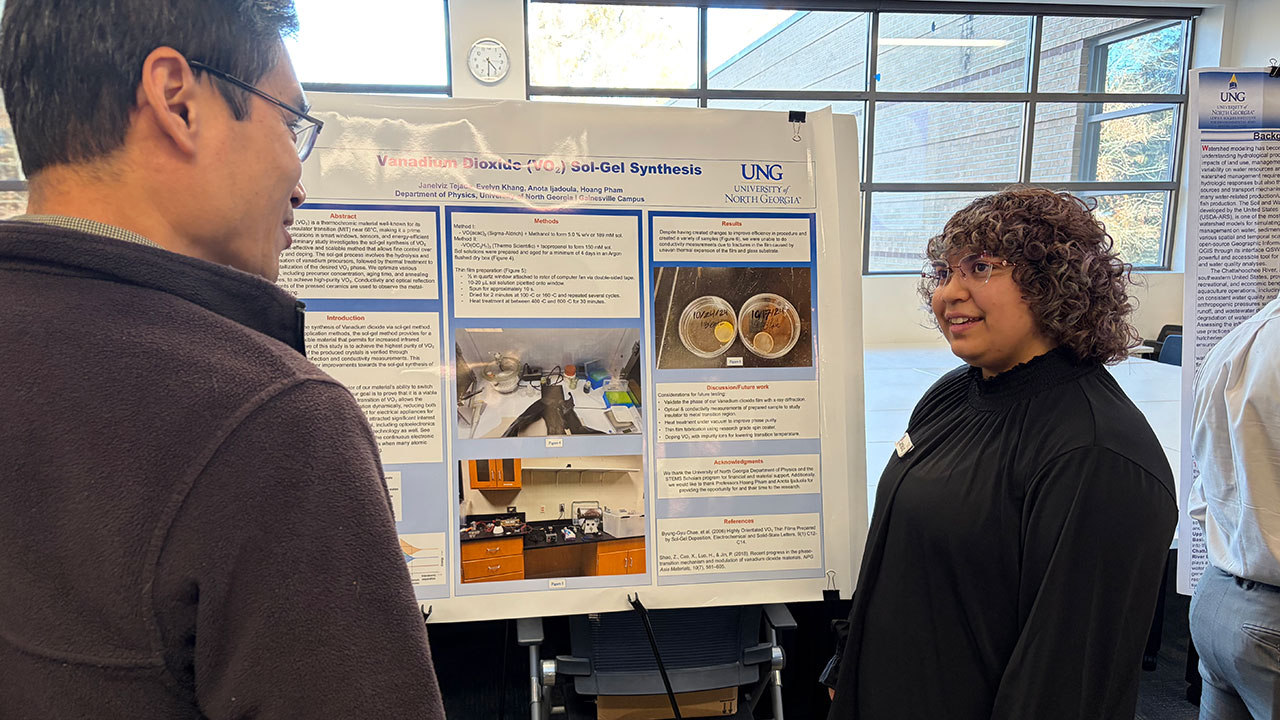
Janelviz Tejada shared her research on using a gel as a semiconductor with the goal of temperature regulation of buildings. She worked on the project with Evelyn Khang, and faculty members Dr. Anota Ijaduola, professor of physics, and Dr. Hoang Pham, assistant professor of physics, served as their mentors. Tejada, a STEMS scholar, has needed to make most of the materials she has used in her research, and she is also grateful for the chance to learn about instrumentation.
"Being at UNG has helped my resiliency a lot. It's a very safe place to make mistakes, learn and get better," Tejada said. "I get better each time. It's helped me not be demoralized when I make mistakes. It's a good life skill to not stay down when you mess up."
She is a junior from Buford, Georgia, pursuing a degree in engineering through the Regents' Engineering Pathway (REP).
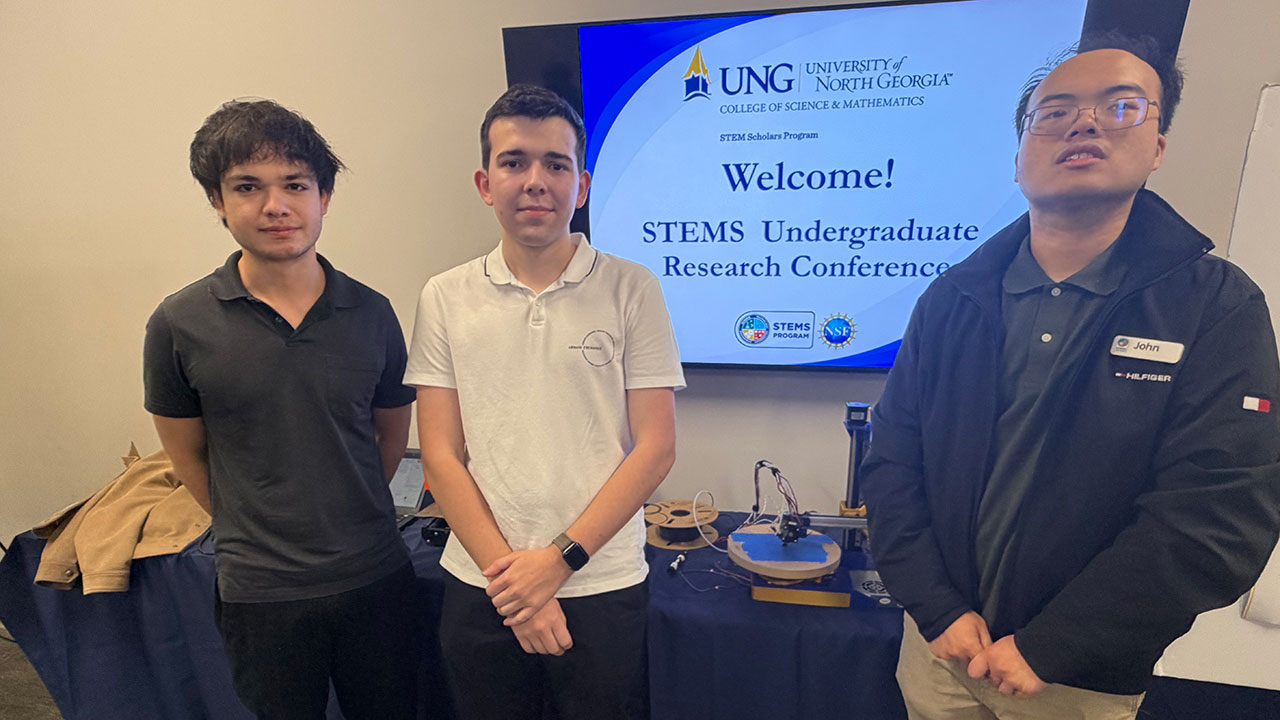
John Cheng, a junior from Commerce, Georgia, pursuing degrees in physics and engineering, is a STEMS scholar who partnered with sophomores Jacob Navarrete and Joseph Oprea on a research project. Dr. Ted Forringer, assistant department head of Physics & Astronomy, served as their faculty advisor. Their work sought to build on an existing four-axis Core R-Theta 3D printer design by assembling and refining a working prototype that adds a rotational axis to the usual X, Y and Z motion, allowing more complex and potentially more precise prints than a conventional 3D printer.
"It's more applicable to engineering because you get to build something," Cheng said. "It's good to do something that's not just pure number-crunching to see if I like it."
Oprea, a Winder, Georgia, resident pursuing a degree in mechanical engineering through the REP, also appreciated the hands-on nature of their project.
"In a classroom environment, it's all theoretical," Oprea said. "In research, you deal with practical problems people face."
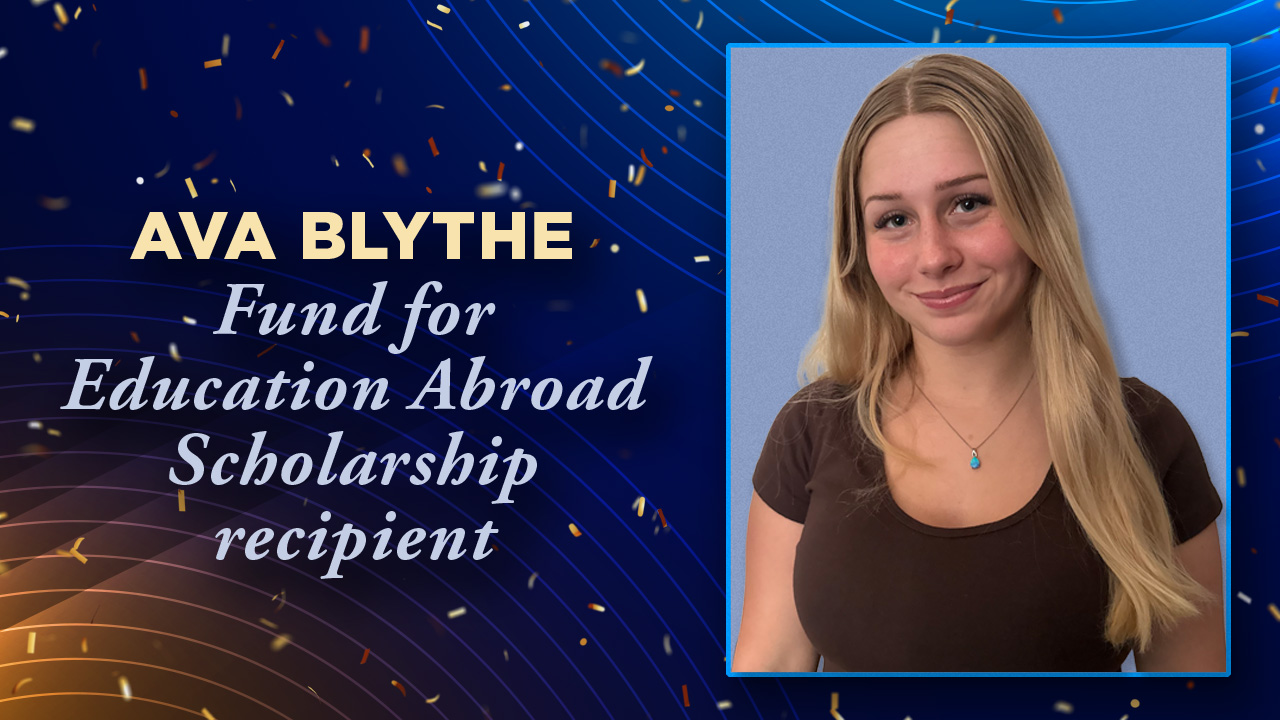
Blythe heads to South Korea as FEA awardee
Ava Blythe, who is pursuing a degree in chemistry, was awarded the FEA scholarship to study in South Korea, making her the 14th FEA awardee at UNG.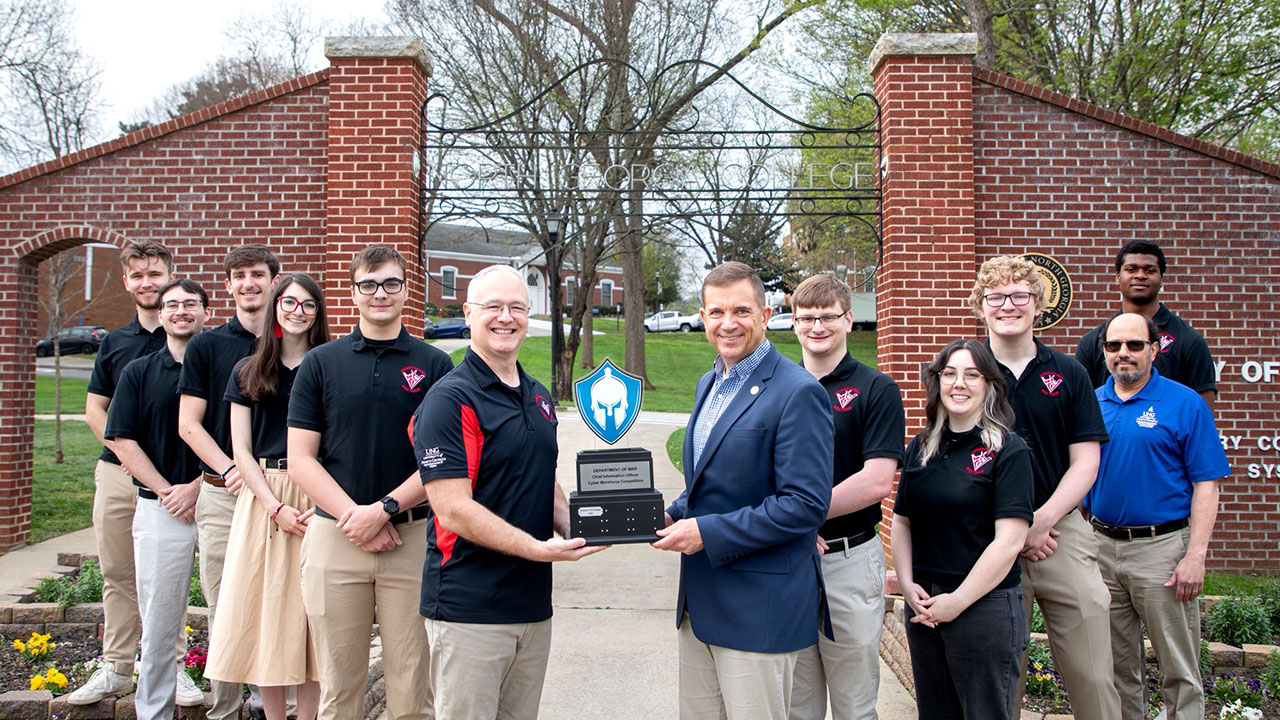
Cyber students take national title in D.C.
An eight-student team from UNG earned a national championship in the Department of War Chief Information Officers Cyber Workforce Competition at the National Defense University in late March.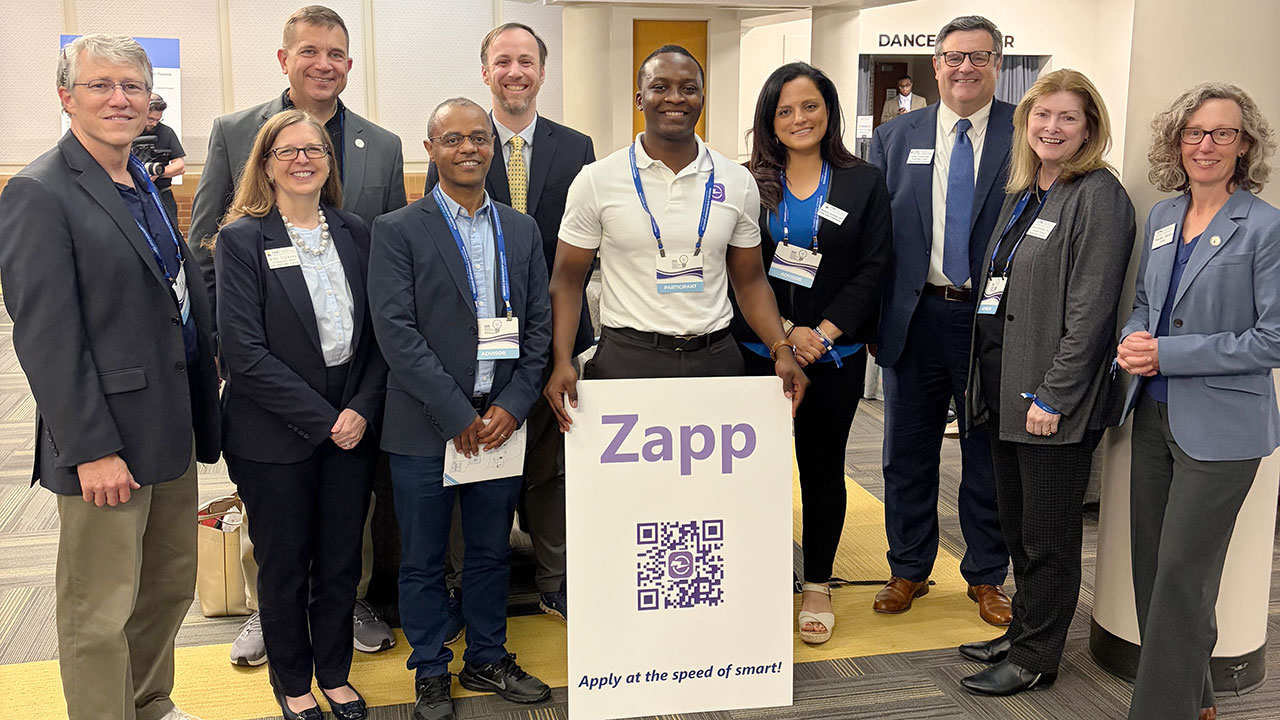
Student gains feedback on innovation at USG event
UNG grad student Aliou Aboubakar Mouhamed competed at the USG Entrepreneurship and Innovation Competition held April 6-7 at Kennesaw State's Marietta Campus.
ONEUNG supports strategic big bets
Donors have an opportunity to strengthen UNG's seven strategic big bets by supporting 20 projects featured in the 'ONEUNG — Bold Forward' university-wide giving campaign.