PSIA Faculty Active Abroad During Summer 2026
Spain
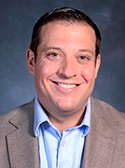
Dr. Nathan Price, whose focus is comparative politics with a concentration in Western European politics, participated in a study abroad in Spain this summer as part of the University System of Georgia’s International Education Study Abroad Program. For five weeks, he and his students became one with the rich cultural and historical fabric of Southwestern Europe, ultimately returning home but still identifying as a part of it.
During the trip, Dr. Price taught a course he created called “European Polarization” and guided students on excursions around Madrid that provided captivating and engaging experiences he believes cannot be had in a classroom alone. For example, one of his most notable excursions was a Spanish Civil War walking tour with a guide who enhanced historical stories by including personal stories about his own family. Another visit was to a nonprofit organization called Fundacion Por Causa, where they learned how the organization studies and releases data reports on human migration into Spain.
Dr. Price says, “Two weeks after we returned, Spain was dominating regional news after a surge of migrants overwhelmed the autonomous city of Ceuta. Having such an in-depth, academic conversation about such a controversial topic just a couple weeks before such a major crisis was a surreal experience”, noting how this helped him and his students better understand the nuances of international human migration.
Looking back on his past study abroad experiences, Dr. Price insists that to truly understand what is happening in another country or region, you must experience it firsthand. Opportunities to travel, such as this one, have allowed him to develop new research ideas, refine his academic focus, and share his experiences with PSIA students in meaningful ways. By connecting important themes to his own experiences in class, Dr. Price can help students better understand how abstract concepts apply to real-world scenarios. Furthermore, these experiences help him frame political topics as realities that directly affect everyday people and their lives.
Pursuing study abroad opportunities can be transformative and eye-opening in many ways. It might be easy to stay in one’s comfort zone, but Dr. Price encourages students to step outside of it and embrace the “little differences between countries” rather than being “stressed out by them”. He says experience is the entire point of going abroad. Dr. Price also acknowledges that anxiety over being away from home is natural but tells students to not let it deter them from an experience of a lifetime. In fact, he has noticed that being away from home for long periods of time has helped him develop his adaptability skills and willingness to take risks.
Whether you seek transformation as a student, instructor, or simply as an individual, you will find it by going out and experiencing the world.
Romania
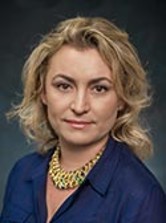
This summer, Dr. Raluca Viman-Miller traveled to Romania as part of a broader European initiative dedicated to strengthening institutional collaboration through the exchange of academic professionals. The initiative promotes the sharing of ideas, teaching practices, and research through meaningful connections and cross-institutional conferences. Through these exchanges, the program meets its overarching goal of fostering strong, positive relationships across all levels of higher education – including students, faculty and staff. This year, Dr. Viman-Miller participated in academic exchanges with the "Henri Coandă" Air Force Academy of Brașov, the "Nicolae Bălcescu" Land Forces Academy of Sibiu, and the University of Oradea.
During her visits to civilian and military institutions, which place a strong emphasis on discipline, sustainability, and creating future leaders, Dr. Viman-Miller drew connections between our own university and higher education institutions in Romania. While the universities may stand separated by geography and culture, she found that they are closely connected by their shared structure, values, and commitment to serve. She believes that they have much to learn about one another through similar civilian-military arrangements, which can be accomplished by continuing to “nurture the collaborations that we have with other international institutions of our kind to see and to learn what exactly works best".
Dr. Viman-Miller notes that the opportunity for international travel and collaboration will prove impactful as individuals from the receiving institutions have gained new insights to shape their academic work and practices. She anticipates that the collaboration will result in future scholarly articles, book chapters, and edited volumes with results that are sure to be seen by the next academic year. In the meantime, Dr. Viman-Miller looks forward to bringing the knowledge and best teaching practices she learned during exchanges in Romania back to classrooms at UNG.
As PSIA students consider studying or working abroad, Dr. Viman-Miller advises students to be open-minded to all possibilities and reflect on the benefits it could bring. “Keep in mind that experiences are meant to enlarge your horizons… they are part of an educational process that will position every student ahead of the game as they build upon their academic and professional careers”, she says.
Taiwan
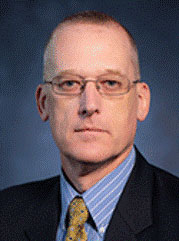
Dr. Scott McDonald has found himself in Taiwan once again this summer, but this time with the primary goal of preparing for a faculty-led study abroad trip to Taipei, Taiwan in Summer 2027. This program for UNG students will span four weeks with students taking two courses, for a total of six credit hours, that offer a greater understanding of Taiwan national security and Chinese culture through in-class instruction and excursions. In preparation for this program, Dr. McDonald met with a local university, travel agents, and professionals to do reconnaissance on places students might visit during their time in Taiwan, such as cultural sites and government buildings. One challenge was finding the most cost-effective measures to ensure the program remains affordable.
Dr. McDonald is eager to put this initiative into motion because it serves two purposes. First, the courses offered during this study abroad will fill a student’s plan of study should it require a mandatory study abroad component. Second, he believes Taipei is incredibly enriching with diversity that is sure to wow anyone who travels there. In order to fulfill these two purposes, Dr. McDonald has been intentional in selecting places he thinks will give students “a good taste of the curriculum” and a unique and enjoyable experience in a foreign country.” During the program, Dr. McDonald plans to hold in-class instruction on Monday and Wednesday, where he will cover Taiwan national security issues and Chinese culture. On Tuesday and Thursday, the group will go on excursions to visit sites that directly correlate to and concretize topics in their coursework.
During his time in Taiwan, Dr. McDonald also had the opportunity to pursue his own goals of joining a delegation of scholars put together by the Taipei Economic and Cultural Representative Office. His last week conducting business was spent visiting offices and agencies that handle Taiwan’s national security, which will help guide his future research interests and preparation of PSIA course material.
As plans for the program continue to unfold, Dr. McDonald asks PSIA students who are interested in going abroad to think about how study abroad can broaden their perspective. Using his own personal experience, he explains how cultural immersion has improved his ability to see things through other points of view and draw more informed conclusions, which is an incredibly valuable trait to have as a member of the PSIA community. He finds these travelling opportunities to be a key steppingstone in helping individuals become more understanding of different systems, cultures, and ways of thinking. He stresses the importance of going abroad, talking to others, and simply asking “why?”. To anyone who may be on the fence about studying abroad, Dr. McDonald says, “Do it!”
Poland
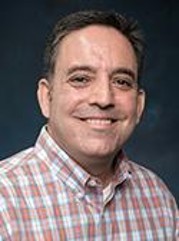
This summer, Dr. Jonathan Miner was invited by the Institute of International Studies at Wroclaw University in Wroclaw, Poland to serve as a guest lecturer. His lecture focused on comparative foreign policy making, which examines how unique histories and government structures can shape national interests, strategy, and cooperation in foreign policy approaches. Using current issues such as the Russia-Ukraine war, Dr. Miner underscored his main idea: “Understanding how your ally or adversary makes their foreign policy is necessary and helpful in developing your own foreign policy.”
Dr. Miner’s visit also strengthened the growing relationship between UNG’s PSIA Department and Wroclaw University as he was the second faculty member, after Dr. Nathan Price, to lecture here. He expects additional opportunities for faculty trips will arise during the next academic year, highlighting the value collaborative experiences can have on educators. Wroclaw University boasts a diverse and eager student body, much like UNG, and he found classroom participation and engagement similar to what he experiences with UNG students. Well-received by students and faculty at Wroclaw, Dr. Miner feels as if their positive responses have provided additional support for the teaching style he has developed throughout his career.
For PSIA students considering studying, working, or conducting research abroad, Dr. Miner describes international travel as a “one-of-a-kind” experience that can permanently change how students view the world and their home university. With the diversity of international students he saw at Wroclaw, he believes UNG students shouldn’t hesitate to go abroad because they are bound to find like-minded and interesting people anywhere.